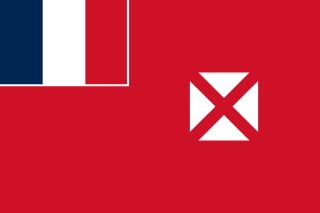
Overview
Around 800 B.C., the first settlers arrived on the islands of Wallis and Futuna, which are a natural midpoint between Fiji and Samoa. Around A.D. 1500, Tongans invaded Wallis, and a chiefdom system resembling Tonga’s formal hierarchy developed on the island. Tongans attempted to settle Futuna but were repeatedly rebuffed. Samoans settled Futuna in the 1600s, and a slightly less centralized chiefdom system formed. Dutch explorers were the first Europeans to see the islands in 1616, followed intermittently by other Europeans, including British explorer Samuel WALLIS in 1767. French Catholic missionaries were the first Europeans to permanently settle Wallis and Futuna in 1837, and they converted most of the population of both islands by 1846. The missionaries and newly converted King LAVELUA of Uvea on Wallis asked France for a protectorate in 1842 following a local rebellion. France agreed, although the protectorate status would not be ratified until 1887. In 1888, King MUSULAMU of Alo and King TAMOLE of Sigave, both on Futuna, signed a treaty establishing a French protectorate; the Wallis and Futuna protectorate was integrated into the territory of New Caledonia the same year. France renegotiated the terms of the protectorate with the territory’s three kings in 1910, expanding French authority.Wallis and Futuna was the only French colony to side with the Vichy regime during World War II, until the arrival of Free French and US troops in 1942. In 1959, inhabitants of the islands voted to separate from New Caledonia, becoming a French overseas territory in 1961. Despite the split, a significant Wallisian and Futunan community still lives in New Caledonia. In 2003, Wallis and Futuna became a French overseas collectivity. The islands joined the Pacific Islands Forum as an associate member in 2018, two years after France’s other Pacific territories became full members of the organization.
Geography
- Location
- Oceania, islands in the South Pacific Ocean, about two-thirds of the way from Hawaii to New Zealand
- Total Area
- 142 sq km
- Climate
- tropical; hot, rainy season (November to April); cool, dry season (May to October); rains 250-300 cm per year (80% humidity); average temperature 26.6 degrees Celsius
- Terrain
- volcanic origin; low hills
- Natural Resources
- NEGL
- Coastline
- 129 km
- Land Borders
- 0 km
People & Society
- Population
- 15,998 (2025 est.)
- Languages
- Wallisian (indigenous Polynesian language) 58.9%, Futunian 30.1%, French (official) 10.8%, other 0.2% (2003 est.)
- Religions
- Roman Catholic 99%, other 1%
- Ethnic Groups
- Polynesian
- Life Expectancy
- 81.1 years (2024 est.)
- Literacy Rate
- 99.8% (2023 est.)
- Urbanization
- 0% of total population (2023)
Government
- Government Type
- parliamentary democracy (Territorial Assembly); overseas collectivity of France
- Capital
- Mata-Utu (on Ile Uvea)
- Independence
- none (overseas collectivity of France)
- Constitution
- 4 October 1958 (French Constitution)
- Legal System
- French civil law
- Executive Branch
- President Emmanuel MACRON (since 14 May 2017); represented by Administrator Superior Jean-Fran ois de MANHEULLE (since 17 November 2025)
Economy
- Economic Overview
- lower-middle-income, agrarian French dependency economy; heavily reliant on French subsidies; licenses fishing rights to Japan and South Korea; major remittances from New Caledonia; aging workforce; import-dependent; deforestation-fueled fragility
- Major Industries
- copra, handicrafts, fishing, lumber