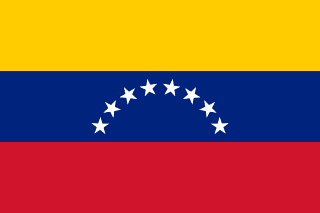
Overview
Venezuela was one of three countries that emerged from the collapse of Gran Colombia in 1830, the others being Ecuador and New Granada (Colombia). For most of the first half of the 20th century, military strongmen ruled Venezuela and promoted the oil industry while allowing some social reforms. Democratically elected governments largely held sway until 1999, but Hugo CHAVEZ, who was president from 1999 to 2013, exercised authoritarian control over other branches of government. This trend continued in 2018 when Nicolas MADURO claimed the presidency for his second term in an election boycotted by most opposition parties and widely viewed as fraudulent. The legislative elections in 2020 were also seen as fraudulent, and most opposition parties and many international actors consider the resulting National Assembly illegitimate. In 2021, many opposition parties broke a three-year election boycott and participated in mayoral and gubernatorial elections, despite flawed conditions. As a result, the opposition more than doubled its representation at the mayoral level and retained four of 23 governorships. The 2021 regional elections marked the first time since 2006 that the EU was allowed to send an electoral observation mission to Venezuela.MADURO has placed strong restrictions on free speech and the press. Since CHAVEZ, the ruling party has expanded the state's role in the economy through expropriations of major enterprises, strict currency exchange and price controls, and over-dependence on the petroleum industry for revenues. Years of economic mismanagement left Venezuela ill-prepared to weather the global drop in oil prices in 2014, sparking an economic decline that has resulted in reduced government social spending, shortages of basic goods, and high inflation. Worsened living conditions have prompted nearly 8 million Venezuelans to emigrate, mainly settling in nearby countries. The US imposed financial sanctions on MADURO and his representatives in 2017 and on sectors of the Venezuelan economy in 2018. Limited sanctions relief followed when the MADURO administration began making democratic and electoral concessions. The government's mismanagement and lack of investment in infrastructure has also weakened the country's energy sector. Caracas has relaxed some controls to mitigate the impact of its sustained economic crisis, such as allowing increased import flexibility for the private sector and the informal use of US dollars and other international currencies. Ongoing concerns include human rights abuses, rampant violent crime, political manipulation of the judicial and electoral systems, and corruption.
Geography
- Location
- Northern South America, bordering the Caribbean Sea and the North Atlantic Ocean, between Colombia and Guyana
- Total Area
- 912,050 sq km
- Climate
- tropical; hot, humid; more moderate in highlands
- Terrain
- Andes Mountains and Maracaibo Lowlands in northwest; central plains (llanos); Guiana Highlands in southeast
- Natural Resources
- petroleum, natural gas, iron ore, gold, bauxite, other minerals, hydropower, diamonds
- Coastline
- 2,800 km
- Land Borders
- 5,267 km
People & Society
- Population
- 31,755,435 (2025 est.)
- Religions
- Roman Catholic 48.1%, Protestant 31.6% (Evangelical 31.4%, Adventist 0.2%), Jehovah's Witness 1.4%, African American/umbanda 0.7%, other 0.1%, believer 3.5%, agnostic 0.1%, atheist, 0.4%, none 13.6%, unspecified 0.6% (2023 est.)
- Ethnic Groups
- unspecified Spanish, Italian, Portuguese, Arab, German, African, Indigenous
- Life Expectancy
- 74.5 years (2024 est.)
- Literacy Rate
- 97.2% (2017 est.)
- Urbanization
- 88.4% of total population (2023)
Government
- Government Type
- federal presidential republic
- Capital
- Caracas
- Independence
- 5 July 1811 (from Spain)
- Constitution
- many previous; latest adopted 15 December 1999, effective 30 December 1999
- Legal System
- civil law system based on the Spanish civil code
- Executive Branch
- Interim President Delcy Elo na RODR GUEZ G mez (since 5 January 2026)
Economy
- Economic Overview
- South American economy; ongoing hyperinflation since mid-2010s; chaotic economy due to political corruption, infrastructure cuts, and human rights abuses; in debt default; oil exporter; hydropower consumer; rising Chinese relations
- GDP (Official Rate)
- $139.395 billion (2023 est.)
- Major Industries
- agricultural products, livestock, raw materials, machinery and equipment, transport equipment, construction materials, medical equipment, pharmaceuticals, chemicals, iron and steel products, crude oil and petroleum products
Infrastructure & Communications
- Railways
- 447 km (2014)