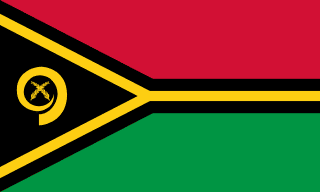
Overview
Austronesian speakers from the Solomon Islands first settled Vanuatu around 2000 B.C. By around 1000, localized chieftain systems began to develop on the islands. Around 1600, Melanesian Chief ROI MATA united some of the islands of modern-day Vanuatu under his rule. In 1606, a Portuguese explorer was the first European to see Vanuatu's Banks Islands and Espiritu Santo, setting up a short-lived settlement on the latter. The next European explorers arrived in the 1760s, and the islands -- then known as the New Hebrides -- were frequented by whalers in the 1800s. European interest in harvesting the islands’ sandalwood trees caused conflict with the inhabitants. In the 1860s, European planters in Australia, Fiji, New Caledonia, and Samoa needed labor and kidnapped almost half the adult males on the islands to work as indentured servants.With growing and overlapping interests in the islands, France and the UK agreed that the New Hebrides would be neutral in 1878 and established a joint naval commission in 1887. In 1906, the two countries created the UK-France condominium to jointly administer the islands, with separate laws, police forces, currencies, and education and health systems. The condominium arrangement was dysfunctional, and the UK used France’s initial defeat in World War II to assert greater control over the islands. During the war, the US stationed up to 50,000 soldiers in Vanuatu. In 1945, they withdrew and sold their equipment, leading to the rise of political and religious movements known as "cargo cults," such as the John Frum movement. The UK-France condominium was reestablished after World War II. The UK was interested in moving the condominium toward independence in the 1960s, but France was hesitant. Political parties agitating for independence began to form, largely divided along linguistic lines. France eventually relented, and elections were held in 1974, with independence granted to the newly named Vanuatu in 1980 under English-speaking Prime Minister Walter LINI. The Nagriamel Movement, with support from French-speaking landowners, then declared the island of Espiritu Santo independent from Vanuatu, but the short-lived state was dissolved 12 weeks later. Linguistic divisions have lessened over time, but highly fractious political parties have led to weak coalition governments that require support from both Anglophone and Francophone parties. Since 2008, prime ministers have been ousted more than a dozen times through no-confidence motions or temporary procedural issues.
Geography
- Location
- Oceania, group of islands in the South Pacific Ocean, about three-quarters of the way from Hawaii to Australia
- Total Area
- 12,189 sq km
- Climate
- tropical; moderated by southeast trade winds from May to October; moderate rainfall from November to April; may be affected by cyclones from December to April
- Terrain
- mostly mountainous islands of volcanic origin; narrow coastal plains
- Natural Resources
- manganese, hardwood forests, fish
- Coastline
- 2,528 km
- Land Borders
- 0 km
People & Society
- Population
- 318,007 (2024 est.)
- Languages
- indigenous languages (more than 100) 82.6%, Bislama (official; creole) 14.5%, English (official) 2.1%, French (official) 0.8% (2020 est.)
- Religions
- Protestant 39.9% (Presbyterian 27.2%, Seventh Day Adventist 14.8%, Anglican 12%, Churches of Christ 5%, Assemblies of God 4.9%, Neil Thomas Ministry/Inner Life Ministry 3.2%), Roman Catholic 12.1%, Apostolic 2.3%, Church of Jesus Christ 1.8%, customary beliefs (including Jon Frum cargo cult) 3.1%, other 12%, none 1.4%, unspecified 0.1% (2020 est.)
- Ethnic Groups
- Ni-Vanuatu 99%, other 1% (European, Asian, other Melanesian, Polynesian, Micronesian, other) (2020 est.)
- Life Expectancy
- 75.7 years (2024 est.)
- Literacy Rate
- 88% (2023 est.)
- Urbanization
- 26% of total population (2023)
Government
- Government Type
- parliamentary republic
- Capital
- Port-Vila (on Efate)
- Independence
- 30 July 1980 (from France and the UK)
- Constitution
- draft completed August 1979, finalized by constitution conference 19 September 1979, ratified by French and British Governments 23 October 1979, effective 30 July 1980 at independence
- Legal System
- mixed system of English common law, French law, and customary law
- Executive Branch
- President Nikenike VUROBARAVU (since 23 July 2022)
Economy
- Economic Overview
- lower-middle income Pacific island economy; extremely reliant on subsistence agriculture and tourism; environmentally fragile; struggling post-pandemic and Tropical Cyclone Harold rebound; sizeable inflation; road infrastructure aid from Australia
- GDP (Official Rate)
- $1.161 billion (2024 est.)
- Major Industries
- food and fish freezing, wood processing, meat canning