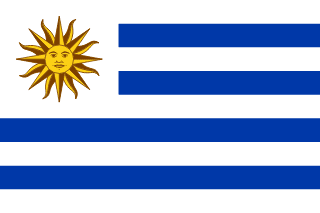
Overview
The Spanish founded the city of Montevideo in modern-day Uruguay in 1726 as a military stronghold, and it soon became an important commercial center due to its natural harbor. Argentina initially claimed Uruguay, but Brazil annexed the country in 1821. Uruguay declared its independence in 1825 and secured its freedom in 1828 after a three-year struggle. The administrations of President Jose BATLLE in the early 20th century launched widespread political, social, and economic reforms that established a statist tradition. A violent Marxist urban guerrilla movement named the Tupamaros (or Movimiento de Liberación Nacional-Tupamaros) launched in the late 1960s and pushed Uruguay's president to cede control of the government to the military in 1973. By year-end, the rebels had been crushed, but the military continued to expand its hold over the government. Civilian rule was restored in 1985. In 2004, the left-of-center Frente Amplio (FA) Coalition won national elections that effectively ended 170 years of political control by the Colorado and National (Blanco) parties. The left-of-center coalition retained the presidency and control of both chambers of congress until 2019. Uruguay's political and labor conditions are among the freest on the South American continent.
Geography
- Location
- Southern South America, bordering the South Atlantic Ocean, between Argentina and Brazil
- Total Area
- 176,215 sq km
- Climate
- warm temperate; freezing temperatures almost unknown
- Terrain
- mostly rolling plains and low hills; fertile coastal lowland
- Natural Resources
- arable land, hydropower, minor minerals, fish
- Coastline
- 660 km
- Land Borders
- 1,591 km
People & Society
- Population
- 3,449,444 (2025 est.)
- Religions
- Roman Catholic 36.5%, Protestant 5% (Evangelical (non-specific) 4.6%, Adventist 0.2%, Protestant (non-specific) 0.3%), African American Cults/Umbanda 2.8%, Jehovah's Witness 0.6%, Church of Jesus Christ 0.2%, other 1%, Believer (not belonging to the church) 1.8%, agnostic 0.3%, atheist 1.3%, none 47.3%, unspecified 3.4%Roman Catholic 42%, Protestant 15%, other 6%, agnostic 3%, atheist 10%, unspecified 24% (2023 est.)
- Ethnic Groups
- White 87.7%, Black 4.6%, Indigenous 2.4%, other 0.3%, none or unspecified 5% (2011 est.)
- Life Expectancy
- 78.9 years (2024 est.)
- Literacy Rate
- 98.9% (2024 est.)
- Urbanization
- 95.8% of total population (2023)
Government
- Government Type
- presidential republic
- Capital
- Montevideo
- Independence
- 25 August 1825 (from Brazil)
- Constitution
- several previous; latest approved by plebiscite 27 November 1966, effective 15 February 1967, reinstated in 1985 at the conclusion of military rule
- Legal System
- civil law system based on the Spanish civil code
- Executive Branch
- President Yamand ORSI Mart nez (since 1 March 2025)
Economy
- Economic Overview
- high-income, export-oriented South American economy; South America s largest middle class; low socioeconomic inequality; growing homicide rates; growing Chinese and EU relations; 2019 Argentine recession hurt; key milk, beef, rice, and wool exporter
- GDP (Official Rate)
- $80.962 billion (2024 est.)
- Major Industries
- food processing, electrical machinery, transportation equipment, petroleum products, textiles, chemicals, beverages
Infrastructure & Communications
- Railways
- 1,673 km (2016) (operational; government claims overall length is 2,961 km)