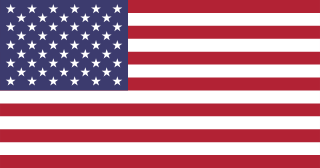
Overview
Thirteen of Britain's American colonies broke with the mother country in 1776 and were recognized as the new nation of the United States of America following the Treaty of Paris in 1783. During the 19th and 20th centuries, 37 new states were added as the nation expanded across the North American continent and acquired a number of overseas possessions. Two of the most traumatic experiences in the nation's history were the Civil War (1861-65), in which a northern Union of states defeated a secessionist Confederacy of 11 southern slave states, and the Great Depression of the 1930s, an economic downturn during which about a quarter of the labor force lost its jobs. Buoyed by victories in World Wars I and II and the end of the Cold War in 1991, the US remains the world's most powerful nation state. Since the end of World War II, the economy has achieved relatively steady growth, low unemployment, and rapid advances in technology.
Geography
- Location
- North America, bordering both the North Atlantic Ocean and the North Pacific Ocean, between Canada and Mexico
- Total Area
- 9,833,517 sq km
- Climate
- mostly temperate, but tropical in Hawaii and Florida, arctic in Alaska, semiarid in the great plains west of the Mississippi River, and arid in the Great Basin of the southwest; low winter temperatures in the northwest are ameliorated occasionally in January and February by warm chinook winds from the eastern slopes of the Rocky Mountains
- Terrain
- vast central plain, mountains in west, hills and low mountains in east; rugged mountains and broad river valleys in Alaska; rugged, volcanic topography in Hawaii
- Natural Resources
- coal, copper, lead, molybdenum, phosphates, rare earth elements, uranium, bauxite, gold, iron, mercury, nickel, potash, silver, tungsten, zinc, petroleum, natural gas, timber, arable land
- Coastline
- 19,924 km
- Land Borders
- 12,002 km
People & Society
- Population
- 338,016,259 (2025 est.)
- Languages
- English only (official) 78.2%, Spanish 13.4%, Chinese 1.1%, other 7.3% (2017 est.)
- Religions
- Protestant 46.5%, Roman Catholic 20.8%, Jewish 1.9%, Church of Jesus Christ 1.6%, other Christian 0.9%, Muslim 0.9%, Jehovah's Witness 0.8%, Buddhist 0.7%, Hindu 0.7%, other 1.8%, unaffiliated 22.8%, don't know/refused 0.6% (2014 est.)
- Ethnic Groups
- White 61.6%, Black or African American 12.4%, Asian 6%, Indigenous and Alaska native 1.1%, Native Hawaiian and Other Pacific Islander 0.2%, other 8.4%, two or more races 10.2% (2020 est.)
- Life Expectancy
- 80.9 years (2024 est.)
- Urbanization
- 83.3% of total population (2023)
Government
- Government Type
- constitutional federal republic
- Capital
- Washington, D.C.
- Independence
- 4 July 1776 (declared independence from Great Britain); 3 September 1783 (recognized by Great Britain)
- Constitution
- previous 1781 (Articles of Confederation and Perpetual Union); latest drafted July - September 1787, submitted to the Congress of the Confederation 20 September 1787, submitted for states' ratification 28 September 1787, ratification completed by nine of the 13 states 21 June 1788, effective 4 March 1789
- Legal System
- common law system based on English common law at the federal level; state legal systems based on common law, except Louisiana, where state law is based on Napoleonic civil code; judicial review of legislative acts
- Executive Branch
- President Donald J. TRUMP (since 20 January 2025)
Economy
- Economic Overview
- world’s largest economy by nominal GDP; largest importer and second-largest exporter; home to leading financial exchanges and global reserve currency; high and growing public debt; inflation moderating but remains above pre-pandemic levels
- GDP (Official Rate)
- $29.185 trillion (2024 est.)
- Major Industries
- highly diversified, world leading, high-technology innovator, second-largest industrial output in the world; petroleum, steel, motor vehicles, aerospace, telecommunications, chemicals, electronics, food processing, consumer goods, lumber, mining
Infrastructure & Communications
- Railways
- 293,564.2 km (2014)