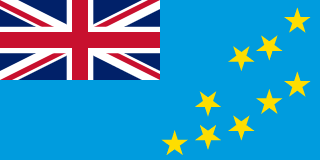
Overview
Voyagers from either Samoa or Tonga first populated Tuvalu in the first millennium A.D., and the islands provided a stepping-stone for various Polynesian communities that subsequently settled in Melanesia and Micronesia. Tuvalu eventually came under Samoan and Tongan spheres of influence, although proximity to Micronesia allowed some Micronesian communities to flourish in Tuvalu, in particular on Nui Atoll. In the late 1700s and early 1800s, a series of American, British, Dutch, and Russian ships visited the islands, which were named the Ellice Islands in 1819. The UK declared a protectorate over islands in 1892 and merged them with the Micronesian Gilbert Islands. The Gilbert and Ellice Islands Protectorate became a colony in 1916. During World War II, the US set up military bases on a few islands, and in 1943, after Japan captured many of the northern Gilbert Islands, the UK transferred administration of the colony southward to Funafuti. After the war, Tarawa in the Gilbert Islands was once again made the colony’s capital, and the center of power was firmly in the Gilbert Islands, including the colony’s only secondary school. Amid growing tensions with the Gilbertese, Tuvaluans voted to secede from the colony in 1974, were granted self-rule in 1975, and gained independence in 1978 as Tuvalu. In 1979, the US relinquished its claims to the Tuvaluan islands in a treaty of friendship.
Geography
- Location
- Oceania, island group consisting of nine coral atolls in the South Pacific Ocean, about half way from Hawaii to Australia
- Total Area
- 26 sq km
- Climate
- tropical; moderated by easterly trade winds (March to November); westerly gales and heavy rain (November to March)
- Terrain
- low-lying and narrow coral atolls
- Natural Resources
- fish, coconut (copra)
- Coastline
- 24 km
- Land Borders
- 0 km
People & Society
- Population
- 11,824 (2025 est.)
- Languages
- Tuvaluan (official), English (official), Samoan, Kiribati (on the island of Nui)
- Religions
- Protestant 92.7% (Congregational Christian Church of Tuvalu 85.9%, Brethren 2.8%, Seventh Day Adventist 2.5%, Assemblies of God 1.5%), Baha'i 1.5%, Jehovah's Witness 1.5%, other 3.9%, none or refused 0.4% (2017 est.)
- Ethnic Groups
- Tuvaluan 97%, Tuvaluan/I-Kiribati 1.6%, Tuvaluan/other 0.8%, other 0.6% (2017 est.)
- Life Expectancy
- 69 years (2024 est.)
- Literacy Rate
- 100% (2022 est.)
- Urbanization
- 66.2% of total population (2023)
Government
- Government Type
- parliamentary democracy under a constitutional monarchy; a Commonwealth realm
- Capital
- Funafuti
- Independence
- 1 October 1978 (from the UK)
- Constitution
- previous 1978 (at independence); latest effective 1 October 1986
- Legal System
- mixed system of English common law and local customary law
- Executive Branch
- King CHARLES III (since 8 September 2022); represented by Governor General Tofiga Vaevalu FALANI (since 29 August 2021)
Economy
- Economic Overview
- upper middle-income Pacific island economy; extremely environmentally fragile; currency pegged to Australian dollar; large international aid recipient; subsistence agrarian sector; Te Kakeega sustainable development; domain name licensing incomes
- GDP (Official Rate)
- $62.28 million (2023 est.)
- Major Industries
- fishing