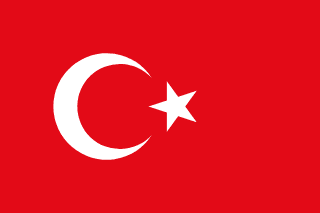
Overview
Modern Turkey was founded in 1923 from the remnants of the Ottoman Empire by reformer and national hero Mustafa KEMAL, known as Ataturk or "Father of the Turks." One-party rule ended in 1950, and periods of instability and military coups have since fractured the multiparty democracy, in 1960, 1971, 1980, 1997, and 2016. Turkey joined the UN in 1945 and NATO in 1952. In 1963, Turkey became an associate member of the European Community; it began accession talks with the EU in 2005. Turkey intervened militarily on Cyprus in 1974 to prevent a Greek takeover of the island and has since acted as patron state to the "Turkish Republic of Northern Cyprus," which only Turkey recognizes. The Kurdistan Workers' Party (PKK), a US-designated terrorist organization, began a separatist insurgency in Turkey in 1984, and the struggle has long dominated the attention of Turkish security forces. In 2013, the Turkish Government and the PKK conducted negotiations aimed at ending the violence, but intense fighting resumed in 2015. The Turkish Government conducted a referendum in 2017 in which voters approved constitutional amendments changing Turkey from a parliamentary to a presidential system.
Geography
- Location
- Southeastern Europe and Southwestern Asia (that portion of Turkey west of the Bosporus is geographically part of Europe), bordering the Black Sea, between Bulgaria and Georgia, and bordering the Aegean Sea and the Mediterranean Sea, between Greece and Syria
- Total Area
- 783,562 sq km
- Climate
- temperate; hot, dry summers with mild, wet winters; harsher in interior
- Terrain
- high central plateau (Anatolia); narrow coastal plain; several mountain ranges
- Natural Resources
- coal, iron ore, copper, chromium, antimony, mercury, gold, barite, borate, celestite (strontium), emery, feldspar, limestone, magnesite, marble, perlite, pumice, pyrites (sulfur), clay, arable land, hydropower
- Coastline
- 7,200 km
- Land Borders
- 2,816 km
People & Society
- Population
- 84,625,585 (2025 est.)
- Religions
- Muslim 99.8% (mostly Sunni), other 0.2% (mostly Christians and Jews)
- Ethnic Groups
- Turkish 70-75%, Kurdish 19%, other minorities 6-11% (2016 est.)
- Life Expectancy
- 76.7 years (2024 est.)
- Literacy Rate
- 97.3% (2021 est.)
- Urbanization
- 77.5% of total population (2023)
Government
- Government Type
- presidential republic
- Capital
- Ankara
- Independence
- 29 October 1923 (republic proclaimed, succeeding the Ottoman Empire)
- Constitution
- several previous; latest ratified 9 November 1982
- Legal System
- civil law system based on various European systems, notably the Swiss civil code
- Executive Branch
- President Recep Tayyip ERDOGAN (since 28 August 2014)
Economy
- Economic Overview
- upper-middle-income, diversified Middle Eastern economy; industrializing economy that maintains large agricultural base; key energy, tourism, and construction sectors; high inflation, interest rates, and foreign debt pose risk to financial stability
- GDP (Official Rate)
- $1.323 trillion (2024 est.)
- Major Industries
- textiles, food processing, automobiles, electronics, mining (coal, chromate, copper, boron), steel, petroleum, construction, lumber, paper
Infrastructure & Communications
- Railways
- 11,497 km (2018)