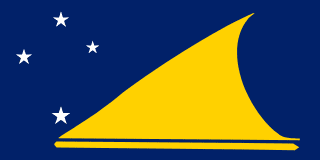
Overview
Tokelau is composed of three atolls (Fakaofo, Atafu, and Nukunonu), and it was first settled by Polynesians around A.D. 1000. The atolls operated relatively independently, but Fakaofo Atoll eventually subjugated the others. British explorers first saw the atolls in 1765 and 1791. Catholic and Protestant missionaries arrived in the 1840s and converted the population on the islands on which they landed.In 1863 Peruvian slave raiders abducted many islanders, and roughly contemporary outbreaks of disease reduced the population to about 200. Settlers of diverse nationalities subsequently intermarried with Tokelauans. In the same period, local governance moved to a system based on a Council of Elders, which still exists today. British interest began in the late 1870s, and Tokelau became a British protectorate in 1889, and in 1916 under the name Union Group, Tokelau became part of the Gilbert and Ellice Islands Colony. In 1925, the UK placed Tokelau under New Zealand administration. The Tokelau Islands Act of 1948 formally transferred sovereignty from the UK to New Zealand, and Tokelauans were granted New Zealand citizenship. In 1979, the US relinquished its claim to Tokelau in the Treaty of Tokehega, and Tokelau relinquished its claim to Swains Island, which is part of American Samoa.Economic opportunities in Tokelau are sparse, and about 80% of Tokelauans live in New Zealand. Tokelau held self-governance referendums in 2006 and 2007 in which more than 60% of voters chose free association with New Zealand; however, the referendums failed to achieve the two-thirds majority necessary to enact a status change.
Geography
- Location
- Oceania, group of three atolls in the South Pacific Ocean, about one-half of the way from Hawaii to New Zealand
- Total Area
- 12 sq km
- Climate
- tropical; moderated by trade winds (April to November)
- Terrain
- low-lying coral atolls enclosing large lagoons
- Natural Resources
- fish
- Coastline
- 101 km
- Land Borders
- 0 km
People & Society
- Population
- 2,453 (2024 est.)
- Languages
- Tokelauan 88.1% (a Polynesian language), English 48.6%, Samoan 26.7%, Tuvaluan 11.2%, Kiribati 1.5%, other 2.8%, none 2.8%, unspecified 0.8% (2016 ests.)
- Religions
- Congregational Christian Church 50.4%, Roman Catholic 38.7%, Presbyterian 5.9%, other Christian 4.2%, unspecified 0.8% (2016 est.)
- Ethnic Groups
- Tokelauan 64.5%, part Tokelauan/Samoan 9.7%, part Tokelauan/Tuvaluan 2.8%, Tuvaluan 7.5%, Samoan 5.8%, other Pacific Islander 3.4%, other 5.6%, unspecified 0.8% (2016 est.)
- Literacy Rate
- 100% (2022 est.)
- Urbanization
- 0% of total population (2023)
Government
- Government Type
- parliamentary democracy under a constitutional monarchy
- Independence
- none (territory of New Zealand)
- Constitution
- many previous; latest effective 1 January 1949 (Tokelau Act 1948 of New Zealand)
- Legal System
- common law system of New Zealand
- Executive Branch
- King CHARLES III (since 8 September 2022); represented by Governor-General of New Zealand Dame Cindy KIRO (since 21 September 2021); New Zealand is represented by Administrator Don HIGGINS (since June 2022)
Economy
- Economic Overview
- small New Zealand territorial island economy; labor force can work in New Zealand or Australia; significant remittances; largely solar-powered infrastructure; reliant on New Zealand funding; stamp, coin, and crafts producer
- GDP (Official Rate)
- $12.658 million (2017 est.)
- Major Industries
- small-scale enterprises for copra production, woodworking, plaited craft goods; stamps, coins; fishing