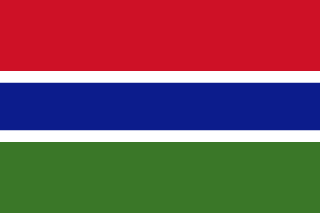
Overview
In the 10th century, Muslim merchants established some of The Gambia’s earliest large settlements as trans-Saharan trade hubs. These settlements eventually grew into major export centers sending slaves, gold, and ivory across the Sahara. Between the 16th and 17th centuries, European colonial powers began establishing trade with The Gambia. In 1664, the United Kingdom established a colony in The Gambia focused on exporting enslaved people across the Atlantic. During the roughly 300 years of the trans-Atlantic slave trade, the UK and other European powers may have exported as many as 3 million people from The Gambia. The Gambia gained its independence from the UK in 1965. Geographically surrounded by Senegal, it formed the short-lived confederation of Senegambia between 1982 and 1989. In 1994, Yahya JAMMEH led a military coup overthrowing the president and banning political activity. He subsequently won every presidential election until 2016, when he lost to Adama BARROW, who headed an opposition coalition during free and fair elections. BARROW won reelection in 2021. The Gambia is the only member of the Economic Community of West African States that does not have presidential term limits. Since the 2016 election, The Gambia and the US have enjoyed improved relations. US assistance to the country has supported democracy-strengthening activities, capacity building, economic development, and security sector education and training programs.
Geography
- Location
- Western Africa, bordering the North Atlantic Ocean and Senegal
- Total Area
- 11,300 sq km
- Climate
- tropical; hot, rainy season (June to November); cooler, dry season (November to May)
- Terrain
- flood plain of the Gambia River flanked by some low hills
- Natural Resources
- fish, clay, silica sand, titanium (rutile and ilmenite), tin, zircon
- Coastline
- 80 km
- Land Borders
- 749 km
People & Society
- Population
- 2,523,327 (2024 est.)
- Languages
- English (official), Mandinka, Wolof, Fula, other indigenous vernaculars
- Religions
- Muslim 96.4%, Christian 3.5%, other or none 0.1% (2019-20 est.)
- Ethnic Groups
- Mandinka/Jahanka 33.3%, Fulani/Tukulur/Lorobo 18.2%, Wolof 12.9%, Jola/Karoninka 11%, Serahuleh 7.2%, Serer 3.5%, other 4%, non-Gambian 9.9% (2019-20 est.)
- Life Expectancy
- 68.4 years (2024 est.)
- Literacy Rate
- 51.6% (2021 est.)
- Urbanization
- 64.5% of total population (2023)
Government
- Government Type
- presidential republic
- Capital
- Banjul
- Independence
- 18 February 1965 (from the UK)
- Constitution
- previous 1965 (Independence Act), 1970; latest adopted 8 April 1996, approved by referendum 8 August 1996, effective 16 January 1997
- Legal System
- mixed system of English common law, Islamic law, and customary law
- Executive Branch
- President Adama BARROW (since 19 January 2022)
Economy
- Economic Overview
- low-income West African economy; agriculture-dominant; high poverty rate; heightened inflation; dependent on foreign assistance and remittances; structural reforms conditioned by IMF Extended Credit Facility program
- GDP (Official Rate)
- $2.508 billion (2024 est.)
- Major Industries
- peanuts, fish, hides, tourism, beverages, agricultural machinery assembly, woodworking, metalworking, clothing