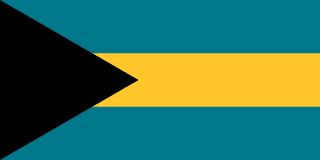
Overview
Lucayan Indians inhabited the Bahama islands when Christopher COLUMBUS first set foot in the New World in 1492. British settlement of the islands began in 1647; the islands became a colony in 1783. Piracy thrived in the 17th and 18th centuries because of The Bahamas' close proximity to shipping lanes. Since gaining independence from the UK in 1973, The Bahamas has prospered through tourism, international banking, and investment management, which comprise up to 85% of GDP. Because of its proximity to the US -- the nearest Bahamian landmass is only 80 km (50 mi) from Florida -- the country is a major transshipment point for illicit trafficking to the US mainland, as well as to Europe. US law enforcement agencies cooperate closely with The Bahamas; the Drug Enforcement Administration, US Coast Guard, and US Customs and Border Protection assist Bahamian authorities with maritime security and law enforcement through Operation Bahamas, Turks and Caicos, or OPBAT.
Geography
- Location
- chain of islands in the North Atlantic Ocean, southeast of Florida, northeast of Cuba; note - although The Bahamas does not border the Caribbean Sea, geopolitically it is often designated as a Caribbean nation
- Total Area
- 13,880 sq km
- Climate
- tropical marine; moderated by warm waters of Gulf Stream
- Terrain
- long, flat coral formations with some low rounded hills
- Natural Resources
- salt, aragonite, timber, arable land
- Coastline
- 3,542 km
- Land Borders
- 0 km
People & Society
- Population
- 415,306 (2025 est.)
- Languages
- English (official), Creole (among Haitian immigrants)
- Religions
- Protestant 69.9% (includes Baptist 34.9%, Anglican 13.7%, Pentecostal 8.9% Seventh Day Adventist 4.4%, Methodist 3.6%, Church of God 1.9%, Plymouth Brethren 1.6%, other Protestant 0.9%), Roman Catholic 12%, other Christian 13% (includes Jehovah's Witness 1.1%), other 0.6%, none 1.9%, unspecified 2.6% (2010 est.)
- Ethnic Groups
- African descent 90.6%, White 4.7%, mixed 2.1%, other 1.9%, unspecified 0.7% (2010 est.)
- Life Expectancy
- 76.7 years (2024 est.)
- Urbanization
- 83.6% of total population (2023)
Government
- Government Type
- parliamentary democracy under a constitutional monarchy; a Commonwealth realm
- Capital
- Nassau
- Independence
- 10 July 1973 (from the UK)
- Constitution
- previous 1964 (pre-independence); latest adopted 20 June 1973, effective 10 July 1973
- Legal System
- common-law system based on the English model
- Executive Branch
- King CHARLES III (since 8 September 2022); represented by Governor-General Cynthia A. PRATT (since 1 September 2023)
Economy
- Economic Overview
- high-income tourism and financial services economy; major income inequality; strong US bilateral relations; several tax relief programs; targeted investment in agriculture, energy, light manufacturing, and technology industries
- GDP (Official Rate)
- $15.833 billion (2024 est.)
- Major Industries
- tourism, banking, oil bunkering, maritime industries, transshipment and logistics, salt, aragonite, pharmaceuticals