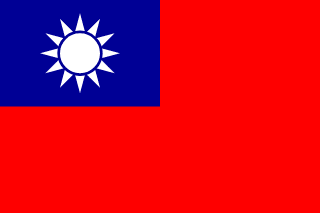
Overview
First inhabited by Austronesian people, Taiwan became home to Han immigrants beginning in the late Ming Dynasty (17th century). In 1895, military defeat forced China's Qing Dynasty to cede Taiwan to Japan, which then governed Taiwan for 50 years. Taiwan came under Chinese Nationalist (Kuomintang, KMT) control after World War II. With the communist victory in the Chinese civil war in 1949, the Nationalist-controlled Republic of China government and 2 million Nationalists fled to Taiwan and continued to claim to be the legitimate government for mainland China and Taiwan, based on a 1947 constitution drawn up for all of China. Until 1987, however, the Nationalist Government ruled Taiwan under a civil war martial law declaration dating to 1948. Beginning in the 1970s, Nationalist authorities gradually began to incorporate the native population into the governing structure beyond the local level. The democratization process expanded rapidly in the 1980s, leading to the then-illegal founding of the Democratic Progressive Party (DPP), Taiwan’s first opposition party, in 1986 and the lifting of martial law the following year. Taiwan held legislative elections in 1992, the first in over 40 years, and its first direct presidential election in 1996. In the 2000 presidential elections, Taiwan underwent its first peaceful transfer of power with the KMT loss to the DPP and afterwards experienced two additional democratic transfers of power in 2008 and 2016. Throughout this period, the island prospered and turned into one of East Asia's economic "Tigers," becoming a major investor in mainland China after 2000 as cross-Strait ties matured. The dominant political issues continue to be economic reform and growth, as well as management of sensitive relations between Taiwan and China.
Geography
- Location
- Eastern Asia, islands bordering the East China Sea, Philippine Sea, South China Sea, and Taiwan Strait, north of the Philippines, off the southeastern coast of China
- Total Area
- 35,980 sq km
- Climate
- tropical; marine; rainy season during southwest monsoon (June to August); persistent and extensive cloudiness all year
- Terrain
- eastern two-thirds mostly rugged mountains; flat to gently rolling plains in west
- Natural Resources
- small deposits of coal, natural gas, limestone, marble, asbestos, arable land
- Coastline
- 1,566.3 km
- Land Borders
- 0 km
People & Society
- Population
- 23,600,776 (2025 est.)
- Religions
- Buddhist 35.3%, Taoist 33.2%, Christian 3.9%, folk religion (includes Confucian) approximately 10%, none or unspecified 18.2% (2005 est.)
- Ethnic Groups
- Han Chinese (including Holo, who compose approximately 70% of Taiwan's population, Hakka, and other groups originating in mainland China) more than 95%, indigenous Malayo-Polynesian peoples 2.3%
- Life Expectancy
- 81.6 years (2024 est.)
- Urbanization
- 80.1% of total population (2023)
Government
- Government Type
- semi-presidential republic
- Capital
- Taipei
- Constitution
- previous 1912, 1931; latest adopted 25 December 1946, promulgated 1 January 1947, effective 25 December 1947
- Legal System
- civil law system
- Executive Branch
- President LAI Ching-te (since 20 May 2024)
Economy
- Economic Overview
- high-income East Asian economy; most technologically advanced computer microchip manufacturing; increasing Chinese interference threatens market capabilities; minimum wages rising; longstanding regional socioeconomic inequality
- GDP (Official Rate)
- $611.391 billion (2023 est.)
- Major Industries
- electronics, communications and information technology products, petroleum refining, chemicals, textiles, iron and steel, machinery, cement, food processing, vehicles, consumer products, pharmaceuticals
Infrastructure & Communications
- Railways
- 1,613.1 km (2018)