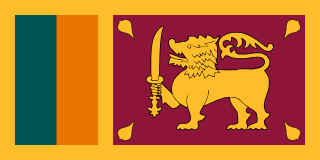
Overview
The first Sinhalese arrived in Sri Lanka late in the 6th century B.C., probably from northern India. Buddhism was introduced circa 250 B.C., and the first kingdoms developed at the cities of Anuradhapura (from about 200 B.C. to about A.D. 1000) and Polonnaruwa (from about A.D. 1070 to 1200). In the 14th century, a South Indian dynasty established a Tamil kingdom in northern Sri Lanka. The Portuguese controlled the coastal areas of the island in the 16th century, followed by the Dutch in the 17th century. The island was ceded to the British in 1796, became a crown colony in 1802, and was formally united under British rule by 1815. As Ceylon, it became independent in 1948; the name was changed to Sri Lanka in 1972. Prevailing tensions between the Sinhalese majority and Tamil separatists erupted into war in 1983. Fighting between the government and Liberation Tigers of Tamil Eelam (LTTE) continued for over a quarter-century. Although Norway brokered peace negotiations that led to a cease-fire in 2002, the fighting slowly resumed and was again in full force by 2006. The government defeated the LTTE in 2009. During the post-conflict years under then-President Mahinda RAJAPAKSA, the government initiated infrastructure development projects, many of which were financed by loans from China. His regime faced allegations of human rights violations and a shrinking democratic space for civil society. In 2015, a new coalition government headed by President Maithripala SIRISENA of the Sri Lanka Freedom Party and Prime Minister Ranil WICKREMESINGHE of the United National Party came to power with pledges to advance economic, political, and judicial reforms. However, implementation of these reforms was uneven. In 2019, Gotabaya RAJAPAKSA won the presidential election and appointed his brother Mahinda prime minister. Civil society raised concerns about the RAJAPAKSA administration’s commitment to pursuing justice, human rights, and accountability reforms, as well as the risks to foreign creditors that Sri Lanka faced given its ongoing economic crisis. A combination of factors including the COVID-19 pandemic; severe shortages of food, medicine, and fuel; and power outages triggered increasingly violent protests in Columbo beginning in 2022. In response, WICKREMESINGHE -- who had already served as prime minister five times -- was named to replace the prime minister, but he became president within a few months when Gotabaya RAJAPAKSA fled the country.
Geography
- Location
- Southern Asia, island in the Indian Ocean, south of India
- Total Area
- 65,610 sq km
- Climate
- tropical monsoon; northeast monsoon (December to March); southwest monsoon (June to October)
- Terrain
- mostly low, flat to rolling plain; mountains in south-central interior
- Natural Resources
- limestone, graphite, mineral sands, gems, phosphates, clay, hydropower, arable land
- Coastline
- 1,340 km
- Land Borders
- 0 km
People & Society
- Population
- 22,050,561 (2025 est.)
- Languages
- Sinhala (official) 87%, Tamil (official) 28.5%, English 23.8% (2012 est.)
- Religions
- Buddhist (official) 70.2%, Hindu 12.6%, Muslim 9.7%, Roman Catholic 6.1%, other Christian 1.3%, other 0.05% (2012 est.)
- Ethnic Groups
- Sinhalese 74.9%, Sri Lankan Tamil 11.2%, Sri Lankan Moors 9.2%, Indian Tamil 4.2%, other 0.5% (2012 est.)
- Life Expectancy
- 76.8 years (2024 est.)
- Literacy Rate
- 92.7% (2023 est.)
- Urbanization
- 19.2% of total population (2023)
Government
- Government Type
- presidential republic
- Capital
- Colombo (commercial capital); Sri Jayewardenepura Kotte (legislative capital)
- Independence
- 4 February 1948 (from the UK)
- Constitution
- several previous; latest adopted 16 August 1978, certified 31 August 1978
- Legal System
- mixed system of Roman-Dutch civil law, English common law, Jaffna Tamil customary law, and Muslim personal law
- Executive Branch
- President Anura Kumara DISSANAYAKE (since 23 September 2024)
Economy
- Economic Overview
- economic contraction in 2022-23 marked by increased poverty and significant inflation; IMF two-year debt relief program following 2022 sovereign default; structural challenges from non-diversified economy and rigid labor laws; heavy dependence on tourism receipts and remittances
- GDP (Official Rate)
- $98.963 billion (2024 est.)
- Major Industries
- processing of rubber, tea, coconuts, tobacco and other agricultural commodities; tourism; clothing and textiles; mining
Infrastructure & Communications
- Railways
- 1,562 km (2016)