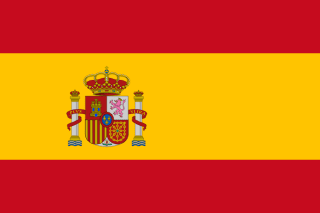
Overview
Spain's powerful world empire of the 16th and 17th centuries ultimately yielded command of the seas to England. Spain remained neutral during both World Wars but suffered through a devastating civil war (1936-39) resulting in a dictatorship. A peaceful transition to democracy after the death of dictator Francisco FRANCO in 1975 and rapid economic modernization after Spain joined the EU in 1986 gave Spain a dynamic and rapidly growing economy. After a severe recession in the wake of the global financial crisis in 2008, Spain has posted solid years of GDP growth above the EU average. Unemployment has fallen but remains high, especially among youth. Spain is the euro-zone's fourth-largest economy. The country has faced increased domestic turmoil in recent years due to the independence movement in its restive Catalonia region.
Geography
- Location
- Southwestern Europe, bordering the Mediterranean Sea, North Atlantic Ocean, Bay of Biscay, and Pyrenees Mountains; southwest of France
- Total Area
- 505,370 sq km
- Climate
- temperate; clear, hot summers in interior, more moderate and cloudy along coast; cloudy, cold winters in interior, partly cloudy and cool along coast
- Terrain
- large, flat to dissected plateau surrounded by rugged hills; Pyrenees Mountains in north
- Natural Resources
- coal, lignite, iron ore, copper, lead, zinc, uranium, tungsten, mercury, pyrites, magnesite, fluorspar, gypsum, sepiolite, kaolin, potash, hydropower, arable land
- Coastline
- 4,964 km
- Land Borders
- 1,952.7 km
People & Society
- Population
- 47,280,433 (2024 est.)
- Religions
- Roman Catholic 58.2%, atheist 16.2%, agnostic 10.8%, other 2.7%, non-believer 10.5%, unspecified 1.7% (2021 est.)
- Ethnic Groups
- Spanish 84.8%, Moroccan 1.7%, Romanian 1.2%, other 12.3% (2021 est.)
- Life Expectancy
- 83 years (2024 est.)
- Literacy Rate
- 99.7% (2021 est.)
- Urbanization
- 81.6% of total population (2023)
Government
- Government Type
- parliamentary constitutional monarchy
- Capital
- Madrid
- Independence
- 1492
- Constitution
- several previous; latest approved by the General Courts 31 October 1978, passed by referendum 6 December 1978, signed by the king 27 December 1978, effective 29 December 1978
- Legal System
- civil law system with regional variations
- Executive Branch
- King FELIPE VI (since 19 June 2014)
Economy
- Economic Overview
- high-income, core-EU and eurozone economy; strong growth driven by public consumption, tourism, and other service exports; tight labor market despite high structural unemployment; efforts to narrow persistent fiscal deficits through tax and spending measures; high but declining unemployment supported by job growth and immigration
- GDP (Official Rate)
- $1.723 trillion (2024 est.)
- Major Industries
- textiles and apparel (including footwear), food and beverages, metals and metal manufactures, chemicals, shipbuilding, automobiles, machine tools, tourism, clay and refractory products, footwear, pharmaceuticals, medical equipment
Infrastructure & Communications
- Railways
- 15,489 km (2020) 9,953 km electrified