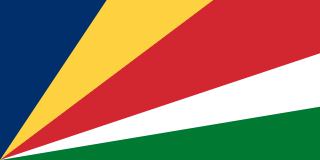
Overview
Seychelles was uninhabited before Europeans discovered the islands early in the 16th century. After a lengthy struggle, France eventually ceded control of the islands to Great Britain in 1814. During colonial rule, a plantation-based economy developed that relied on imported labor, primarily from European colonies in Africa. Seychelles gained independence in 1976 through negotiations with Great Britain. In 1977, Prime Minister France-Albert RENE launched a coup against the country’s first president, and Seychelles became a socialist one-party state until adopting a new constitution and holding elections in 1993. RENE continued to lead Seychelles through two election cycles until he stepped down in 2004. Vice President James Alix MICHEL took over the presidency and in 2006 was elected to a new five-year term; he was reelected in 2011 and again in 2015. In 2016, James MICHEL resigned and handed over the presidency to his vice-president, Danny FAURE. In 2020, Wavel RAMKALAWAN was elected president, the first time an opposition candidate has won the presidency.
Geography
- Location
- archipelago in the Indian Ocean, northeast of Madagascar
- Total Area
- 455 sq km
- Climate
- tropical marine; humid; cooler season during southeast monsoon (late May to September); warmer season during northwest monsoon (March to May)
- Terrain
- Mahe Group is volcanic with a narrow coastal strip and rocky, hilly interior; others are relatively flat coral atolls, or elevated reefs; sits atop the submarine Mascarene Plateau
- Natural Resources
- fish, coconuts (copra), cinnamon trees
- Coastline
- 491 km
- Land Borders
- 0 km
People & Society
- Population
- 98,187 (2024 est.)
- Languages
- Seychellois Creole (official) 89.1%, English (official) 5.1%, French (official) 0.7%, other 3.8%, unspecified 1.4% (2010 est.)
- Religions
- Roman Catholic 76.2%, Protestant 10.5% (Anglican 6.1%, Pentecostal Assembly 1.5%, Seventh Day Adventist 1.2%, other Protestant 1.7%), other Christian 2.4%, Hindu 2.4%, Muslim 1.6%, other non-Christian 1.1%, unspecified 4.8%, none 0.9% (2010 est.)
- Ethnic Groups
- predominantly Creole (mainly of East African and Malagasy heritage); also French, Indian, Chinese, and Arab populations
- Life Expectancy
- 76.6 years (2024 est.)
- Urbanization
- 58.8% of total population (2023)
Government
- Government Type
- presidential republic
- Capital
- Victoria
- Independence
- 29 June 1976 (from the UK)
- Constitution
- previous 1970, 1979; latest drafted May 1993, approved by referendum 18 June 1993, effective 23 June 1993
- Legal System
- mixed system of English common law, French civil law, and customary law
- Executive Branch
- President Patrick HERMINIE (since 26 October 2025)
Economy
- Economic Overview
- high-income Indian Ocean island economy; rapidly growing tourism sector; major tuna exporter; offshore financial hub; environmentally fragile and investing in ocean rise mitigation; recently discovered offshore oil potential; successful anticorruption efforts
- GDP (Official Rate)
- $2.167 billion (2024 est.)
- Major Industries
- fishing, tourism, beverages