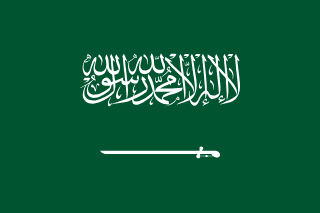
Overview
Saudi Arabia is the birthplace of Islam and home to Islam's two holiest shrines in Mecca and Medina. The king's official title is the Custodian of the Two Holy Mosques. ABD AL-AZIZ bin Abd al-Rahman AL SAUD (Ibn Saud) founded the modern Saudi state in 1932 after a 30-year campaign to unify most of the Arabian Peninsula. One of his male descendants rules the country today, as required by the country's 1992 Basic Law. After Iraq invaded Kuwait in 1990, Saudi Arabia took in the Kuwaiti royal family and 400,000 refugees, while allowing Western and Arab troops to deploy on its soil and liberate Kuwait the following year. Major terrorist attacks in 2003 spurred a strong ongoing campaign against domestic terrorism and extremism. US troops returned to the Kingdom in 2019 after attacks on Saudi oil infrastructure. From 2005 to 2015, King ABDALLAH bin Abd al-Aziz Al Saud incrementally modernized the Kingdom through a series of social and economic initiatives that included expanding employment and social opportunities for women, attracting foreign investment, increasing the private sector's role in the economy, and discouraging the hiring of foreign workers. Saudi Arabia saw some protests during the 2011 Arab Spring but not the level of bloodshed seen in protests elsewhere in the region; Riyadh took a cautious but firm approach, arresting and quickly releasing some protesters and using its state-sponsored clerics to counter political and Islamist activism. The government held its first-ever elections in 2005 and 2011, when Saudis voted for municipal councilors. King ABDALLAH's reforms accelerated under King SALMAN bin Abd al-Aziz, who ascended to the throne in 2015 and lifted the Kingdom's ban on women driving, implemented education reforms, funded green initiatives, and allowed cinemas to operate for the first time in decades. In 2015, women were allowed to vote and stand as candidates for the first time in municipal elections, with 19 women winning seats. King SALMAN initially named his nephew, MUHAMMAD BIN NAYIF bin Abd al-Aziz Al Saud, as the Crown Prince, but a palace coup in 2017 resulted in King SALMAN's son, Deputy Crown Prince MUHAMMAD BIN SALMAN bin Abd al-Aziz Al Saud, taking over as Crown Prince. King SALMAN appointed MUHAMMAD BIN SALMAN as prime minister in 2022.In 2015, Saudi Arabia led a coalition of 10 countries in a military campaign to restore Yemen's legitimate government, which had been ousted by Houthi forces. The war in Yemen has drawn international criticism for civilian casualties and its effect on the country’s dire humanitarian situation. The same year, MUHAMMAD BIN SALMAN announced that Saudi Arabia would lead a multi-nation Islamic Coalition to fight terrorism, and in 2017, Saudi Arabia inaugurated the Global Center for Combatting Extremist Ideology (also known as "Etidal"). The country remains a leading producer of oil and natural gas and holds about 17% of the world's proven oil reserves as of 2020. The government continues to pursue economic reform and diversification -- particularly since Saudi Arabia's accession to the WTO in 2005 -- and promotes foreign investment in the Kingdom. In 2016, the Saudi Government announced broad socio-economic reforms known as Vision 2030. Low global oil prices in 2015 and 2016 significantly lowered Saudi Arabia’s governmental revenue, prompting cuts to subsidies on water, electricity, and gasoline; reduced government-employee compensation; and new land taxes. In coordination with OPEC and some key non-OPEC countries, Saudi Arabia agreed to cut oil output in 2017 to regulate supply and help boost global prices. In 2020, this agreement collapsed, and Saudi Arabia launched a price war by flooding the market with low-priced oil before returning to the negotiating table to agree to a major output cut that helped buoy prices.
Geography
- Location
- Middle East, bordering the Persian Gulf and the Red Sea, north of Yemen
- Total Area
- 2,149,690 sq km
- Climate
- harsh, dry desert with great temperature extremes
- Terrain
- mostly sandy desert
- Natural Resources
- petroleum, natural gas, iron ore, gold, copper
- Coastline
- 2,640 km
- Land Borders
- 4,272 km
People & Society
- Population
- 36,544,431 (2024 est.)
- Religions
- Muslim (official; citizens are 85-90% Sunni and 10-12% Shia), other (includes Eastern Orthodox, Protestant, Roman Catholic, Jewish, Hindu, Buddhist, and Sikh) (2020 est.)
- Ethnic Groups
- Arab 90%, Afro-Asian 10%
- Life Expectancy
- 77.2 years (2024 est.)
- Literacy Rate
- 97.9% (2024 est.)
- Urbanization
- 85% of total population (2023)
Government
- Government Type
- absolute monarchy
- Capital
- Riyadh
- Independence
- 23 September 1932 (unification of the kingdom)
- Constitution
- 1 March 1992 -- Basic Law of Government, issued by royal decree, serves as the constitutional framework and is based on the Qur'an and the life and traditions of the Prophet Muhammad
- Legal System
- Islamic (sharia) system with some elements of Egyptian, French, and customary law; commercial disputes handled by special committees
- Executive Branch
- King SALMAN bin Abd al-Aziz Al Saud (since 23 January 2015)
Economy
- Economic Overview
- high-income, oil-based Middle Eastern economy; OPEC founding member; Vision 2030 strategy prioritizing economic diversification, increased private sector involvement, and projects funded by sovereign wealth fund and foreign investment; young labor force; falling but significant poverty rate despite lack of official statistics
- GDP (Official Rate)
- $1.238 trillion (2024 est.)
- Major Industries
- crude oil production, petroleum refining, basic petrochemicals, ammonia, industrial gases, sodium hydroxide (caustic soda), cement, fertilizer, plastics, metals, commercial ship repair, commercial aircraft repair, construction
Infrastructure & Communications
- Railways
- 5,410 km (2016)