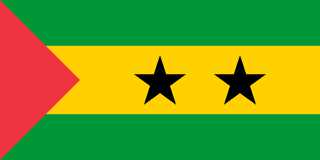
Overview
Portugal discovered and colonized the uninhabited Sao Tome and Principe islands in the late 15th century, setting up a sugar-based economy that gave way to coffee and cocoa in the 19th century -- all grown with African slave labor, a form of which lingered into the 20th century. While independence was achieved in 1975, democratic reforms were not instituted until the late 1980s. The country held its first free elections in 1991, but frequent internal wrangling among the various political parties precipitated repeated changes in leadership and failed, non-violent coup attempts in 1995, 1998, 2003, and 2009. In 2012, three opposition parties combined in a no-confidence vote to bring down the majority government of former Prime Minister Patrice TROVOADA, but legislative elections returned him to the office two years later. President Evaristo CARVALHO, of the same political party as TROVOADA, was elected in 2016, marking a rare instance in which the same party held the positions of president and prime minister. TROVOADA resigned in 2018 and was replaced by Jorge BOM JESUS. Carlos Vila NOVA was elected president in 2021. TROVOADA began his fourth stint as prime minister in 2022, after his party's victory in legislative elections.
Geography
- Location
- Central Africa, islands in the Gulf of Guinea, just north of the Equator, west of Gabon
- Total Area
- 964 sq km
- Climate
- tropical; hot, humid; one rainy season (October to May)
- Terrain
- volcanic, mountainous
- Natural Resources
- fish, hydropower
- Coastline
- 209 km
- Land Borders
- 0 km
People & Society
- Population
- 223,561 (2024 est.)
- Languages
- Portuguese 98.4% (official), Forro 36.2%, Cabo Verdian 8.5%, French 6.8%, Angolar 6.6%, English 4.9%, Lunguie 1%, other (including sign language) 2.4%; other Portuguese-based Creoles are also spoken (2012 est.)
- Religions
- Catholic 55.7%, Adventist 4.1%, Assembly of God 3.4%, New Apostolic 2.9%, Mana 2.3%, Universal Kingdom of God 2%, Jehovah's Witness 1.2%, other 6.2%, none 21.2%, unspecified 1% (2012 est.)
- Ethnic Groups
- Mestico, Angolares (descendants of Angolan slaves), Forros (descendants of freed slaves), Servicais (contract laborers from Angola, Mozambique, and Cabo Verde), Tongas (children of servicais born on the islands), Europeans (primarily Portuguese), Asians (mostly Chinese)
- Life Expectancy
- 67.7 years (2024 est.)
- Literacy Rate
- 87.4% (2019 est.)
- Urbanization
- 76.4% of total population (2023)
Government
- Government Type
- semi-presidential republic
- Capital
- Sao Tome
- Independence
- 12 July 1975 (from Portugal)
- Constitution
- approved 5 November 1975
- Legal System
- mixed system of civil law based on the Portuguese model and customary law
- Executive Branch
- President Carlos Manuel VILA NOVA (since 2 October 2021)
Economy
- Economic Overview
- lower middle-income Central African island economy; falling cocoa production due to drought and mismanagement; joint oil venture with Nigeria; government owns 90% of land; high debt, partly from fuel subsidies; tourism gutted by COVID-19
- GDP (Official Rate)
- $764.274 million (2024 est.)
- Major Industries
- light construction, textiles, soap, beer, fish processing, timber