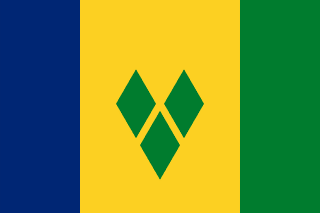
Overview
Resistance from native Caribs prevented colonization on Saint Vincent until 1719. France and England disputed the island for most of the 18th century, but it was ceded to England in 1783. The British prized Saint Vincent because of its fertile soil, which allowed for thriving slave-run plantations of sugar, coffee, indigo, tobacco, cotton, and cocoa. In 1834, the British abolished slavery. Immigration of indentured servants eased the ensuing labor shortage, as did subsequent immigrant waves from Portugal and East India. Conditions remained harsh for both former slaves and immigrant agricultural workers, however, as depressed world sugar prices kept the economy stagnant until the early 1900s. The economy then went into a period of decline, with many landowners abandoning their estates and leaving the land to be cultivated by liberated slaves. Between 1960 and 1962, Saint Vincent and the Grenadines was a separate administrative unit of the Federation of the West Indies. Autonomy was granted in 1969 and independence in 1979. In 2021, the eruption of the La Soufrière volcano in the north of Saint Vincent destroyed much of Saint Vincent’s most productive agricultural lands. Unlike most of its tourism-dependent neighbors, the Vincentian economy is primarily agricultural.
Geography
- Location
- Caribbean, islands between the Caribbean Sea and North Atlantic Ocean, north of Trinidad and Tobago
- Total Area
- 389 sq km (Saint Vincent 344 sq km)
- Climate
- tropical; little seasonal temperature variation; rainy season (May to November)
- Terrain
- volcanic, mountainous
- Natural Resources
- hydropower, arable land
- Coastline
- 84 km
- Land Borders
- 0 km
People & Society
- Population
- 100,647 (2024 est.)
- Languages
- English, Vincentian Creole English, French patois
- Religions
- Protestant 75% (Pentecostal 27.6%, Anglican 13.9%, Seventh Day Adventist 11.6%, Baptist 8.9%, Methodist 8.7%, Evangelical 3.8%, Salvation Army 0.3%, Presbyterian/Congregational 0.3%), Roman Catholic 6.3%, Rastafarian 1.1%, Jehovah's Witness 0.8%, other 4.7%, none 7.5%, unspecified 4.7% (2012 est.)
- Ethnic Groups
- African descent 71.2%, mixed 23%, Indigenous 3%, East Indian/Indian 1.1%, European 1.5%, other 0.2% (2012 est.)
- Life Expectancy
- 77.2 years (2024 est.)
- Urbanization
- 54.3% of total population (2023)
Government
- Government Type
- parliamentary democracy under a constitutional monarchy; a Commonwealth realm
- Capital
- Kingstown
- Independence
- 27 October 1979 (from the UK)
- Constitution
- previous 1969, 1975; latest drafted 26 July 1979, effective 27 October 1979 (The Saint Vincent Constitution Order 1979)
- Legal System
- English common law
- Executive Branch
- King CHARLES III (since 8 September 2022); represented by Governor General Stanley JOHN (since 6 January 2026)
Economy
- Economic Overview
- upper middle-income Caribbean island economy; key agriculture and tourism sectors; environmentally fragile; diversifying economy across services, science and knowledge, and creative industries; CARICOM member and US Caribbean Basin Initiative beneficiary
- GDP (Official Rate)
- $1.157 billion (2024 est.)
- Major Industries
- tourism; food processing, cement, furniture, clothing, starch