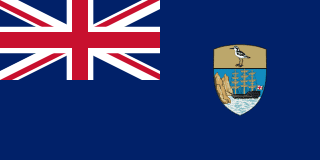
Overview
Saint Helena is a British Overseas Territory off the coast of Africa in the South Atlantic Ocean, and it consists of Saint Helena, Ascension Island, and the island group of Tristan da Cunha. Saint Helena: The island was uninhabited when the Portuguese first discovered it in 1502, and the British garrisoned troops on Saint Helena during the 17th century. It acquired fame as the place of Napoleon BONAPARTE's exile from 1815 until his death in 1821, but its importance as a port of call declined after the opening of the Suez Canal in 1869. During the Anglo-Boer War in South Africa, several thousand Boer prisoners were confined on the island between 1900 and 1903. Saint Helena is one of the most remote populated places in the world. The British Government committed to building an airport on Saint Helena in 2005. After more than a decade of delays and construction, a commercial air service to South Africa via Namibia was inaugurated in 2017. The weekly service to Saint Helena from Johannesburg via Windhoek in Namibia takes just over six hours (including the refueling stop in Windhoek) and replaces the mail ship that had made a five-day journey to the island every three weeks. Ascension Island: This barren and uninhabited island was discovered and named by the Portuguese in 1503. The British garrisoned the island in 1815 to prevent a rescue of NAPOLEON from Saint Helena. It served as a provisioning station for the Royal Navy's West Africa Squadron on anti-slavery patrol. The island remained under Admiralty control until 1922, when it became a dependency of Saint Helena. During World War II, the UK permitted the US to construct an airfield on Ascension in support of transatlantic flights to Africa and anti-submarine operations in the South Atlantic. In the 1960s, the island became an important space tracking station for the US. In 1982, Ascension was an essential staging area for British forces during the Falklands War. It remains a critical refueling point in the air-bridge from the UK to the South Atlantic. The island hosts one of four dedicated ground antennas that assist in the operation of the Global Positioning System (GPS) navigation system -- the others are on Diego Garcia (British Indian Ocean Territory), Kwajalein (Marshall Islands), and at Cape Canaveral, Florida (US). NASA and the US Air Force also operate a Meter-Class Autonomous Telescope (MCAT) on Ascension as part of the deep space surveillance system for tracking orbital debris, which can be a hazard to spacecraft and astronauts. Tristan da Cunha: The island group consists of Tristan da Cunha, Nightingale, Inaccessible, and Gough Islands. Tristan da Cunha, named after its Portuguese discoverer (1506), was garrisoned by the British in 1816 to prevent any attempt to rescue NAPOLEON from Saint Helena. Gough and Inaccessible Islands have been designated World Heritage Sites. South Africa leases a site for a meteorological station on Gough Island.
Geography
- Location
- islands in the South Atlantic Ocean, about midway between South America and Africa; Ascension Island lies 1,300 km (800 mi) northwest of Saint Helena; Tristan da Cunha lies 4,300 km (2,700 mi) southwest of Saint Helena
- Total Area
- 394 sq km
- Climate
- Saint Helena: tropical marine; mild, tempered by trade winds Ascension Island: tropical marine; mild, semi-arid Tristan da Cunha: temperate marine; mild, tempered by trade winds (tends to be cooler than Saint Helena)
- Terrain
- the islands of this group are of volcanic origin associated with the Atlantic Mid-Ocean Ridge Saint Helena: rugged, volcanic; small scattered plateaus and plainsAscension: surface covered by lava flows and cinder cones of 44 dormant volcanoes; terrain rises to the eastTristan da Cunha: sheer cliffs line the coastline of the nearly circular island; the flanks of the central volcanic peak are deeply dissected; narrow coastal plain lies between The Peak and the coastal cliffs
- Natural Resources
- fish, lobster
- Coastline
- Saint Helena: 60 km Ascension Island: NA Tristan da Cunha (island only): 34 km
- Land Borders
- 0 km
People & Society
- Population
- 7,943 (2024 est.)
- Languages
- English
- Religions
- Anglican 63.2%, unspecified 11.4%, no religion 9%, Jehovah's Witness 3.8%, Baptist 2.3%, Salvation Army 2%, Roman Catholic 2.2%, Seventh Day Adventist 1.9%, New Apostolic 1.6%, other Christian 1.4%, other 1.1% (2021 est.)
- Ethnic Groups
- St. Helena 82.1%, UK 7.6%, South Africa 3.6%, Ascension 2.8%, other 3.9% (2021 est.)
- Life Expectancy
- 80.9 years (2024 est.)
- Urbanization
- 40.7% of total population (2023)
Government
- Government Type
- parliamentary democracy
- Capital
- Jamestown
- Independence
- none (overseas territory of the UK)
- Constitution
- several previous; latest effective 1 September 2009 (St. Helena, Ascension and Tristan da Cunha Constitution Order 2009)
- Legal System
- English common law and local statutes
- Executive Branch
- King CHARLES III (since 8 September 2022)
Economy
- Economic Overview
- upper middle-income, British Atlantic Ocean territorial economy; native (but pegged to British pound) currency user on 2 of 3 islands; significant UK financial support; unique land/farming commune structure; military-related economic activity; sport fishing locale
- Major Industries
- construction, crafts (furniture, lacework, fancy woodwork), fishing, collectible postage stamps