Overview
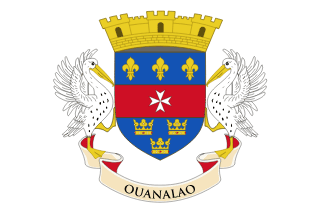
In 1493, Christopher COLUMBUS named Saint Barthelemy for his brother Bartolomeo, but the island was first settled by the French in 1648. In 1784, France sold the island to Sweden, which renamed the largest town Gustavia after the Swedish King GUSTAV III and made it a free port; the island prospered as a trade and supply center during the colonial wars of the 18th century. France repurchased the island in 1877 and took control the following year, placing it under the administration of Guadeloupe. Saint Barthelemy retained its free port status along with various Swedish appellations such as Swedish street and town names, and the three-crown symbol on the coat of arms. In 2003, the islanders voted to secede from Guadeloupe, and in 2007, the island became a French overseas collectivity. In 2012, it became an overseas territory of the EU, allowing it to exert local control over the permanent and temporary immigration of foreign workers, including non-French European citizens. Hurricane Irma hit the island in 2017 and caused extensive damage.
Geography
- Location
- Caribbean, island between the Caribbean Sea and the North Atlantic Ocean; located in the Leeward Islands (northern) group; Saint Barthelemy lies east of the US Virgin Islands
- Total Area
- 25 sq km
- Climate
- tropical, with practically no variation in temperature; has two seasons (dry and humid)
- Terrain
- hilly, almost completely surrounded by shallow-water reefs, with plentiful beaches
- Natural Resources
- few natural resources; beaches foster tourism
- Land Borders
- 0 km
People & Society
- Population
- 7,079 (2025 est.)
- Ethnic Groups
- French, Portuguese, Caribbean, Afro-Caribbean
- Life Expectancy
- 81 years (2024 est.)
Government
- Government Type
- parliamentary democracy (Territorial Council); overseas collectivity of France
- Capital
- Gustavia
- Independence
- none (overseas collectivity of France)
- Constitution
- 4 October 1958 (French Constitution)
- Legal System
- French civil law
- Executive Branch
- President Emmanuel MACRON (since 14 May 2017), represented by Prefect Cyrille LE VELY (since 15 January 2025)
Economy
- Economic Overview
- high-income French Caribbean territorial economy; duty-free luxury commerce and tourism industries; import-dependent for food, water, energy, and manufacturing; large Brazilian and Portuguese labor supply; environmentally fragile