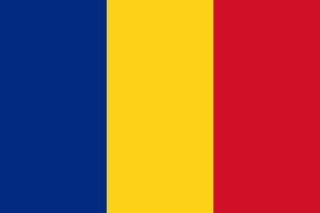
Overview
The principalities of Wallachia and Moldavia -- for centuries under the control of the Turkish Ottoman Empire -- secured their autonomy through the Treaty of Paris in 1856. They were de facto linked in 1859 and formally united in 1862 under the new name of Romania. The country joined the Allied Powers in World War I and subsequently acquired new territories -- most notably Transylvania -- that more than doubled its size. In 1940, Romania allied with the Axis powers and participated in the 1941 German invasion of the USSR. Three years later, overrun by the Soviets, Romania signed an armistice. The post-war Soviet occupation led to the formation of a communist "people's republic" in 1947 and the abdication of the king. The decades-long rule of dictator Nicolae CEAUSESCU, who took power in 1965, and his Securitate police state became increasingly oppressive and draconian through the 1980s. CEAUSESCU was overthrown and executed in late 1989. Former communists dominated the government until 1996 when they were swept from power. Romania joined NATO in 2004, the EU in 2007, and the Schengen Area for air and sea travel in 2024.
Geography
- Location
- Southeastern Europe, bordering the Black Sea, between Bulgaria and Ukraine
- Total Area
- 238,391 sq km
- Climate
- temperate; cold, cloudy winters with frequent snow and fog; sunny summers with frequent showers and thunderstorms
- Terrain
- central Transylvanian Basin is separated from the Moldavian Plateau on the east by the Eastern Carpathian Mountains and separated from the Walachian Plain on the south by the Transylvanian Alps
- Natural Resources
- petroleum (reserves declining), timber, natural gas, coal, iron ore, salt, arable land, hydropower
- Coastline
- 225 km
- Land Borders
- 2,844 km
People & Society
- Population
- 18,148,155 (2024 est.)
- Religions
- Romanian Orthodox 85.3%, Roman Catholic 4.5%, Reformed 3%, Pentecostal 2.5%, other 4.7% (2021 est.)
- Ethnic Groups
- Romanian 89.3%, Hungarian 6%, Romani 3.4%, Ukrainian 0.3%, German 0.1%, other 0.9% (2021 est.)
- Life Expectancy
- 76.9 years (2024 est.)
- Literacy Rate
- 99.2% (2021 est.)
- Urbanization
- 54.7% of total population (2023)
Government
- Government Type
- semi-presidential republic
- Capital
- Bucharest
- Independence
- 9 May 1877 (independence proclaimed from the Ottoman Empire; 13 July 1878 (independence recognized by the Treaty of Berlin); 26 March 1881 (kingdom proclaimed); 30 December 1947 (republic proclaimed)
- Constitution
- several previous; latest adopted 21 November 1991, approved by referendum and effective 8 December 1991
- Legal System
- civil law system
- Executive Branch
- President Nicușor DAN (since 26 May 2025)
Economy
- Economic Overview
- high-income, EU-member economy; euro membership delayed over macroeconomic indicators; persistent inflation, but consumption and EU-funded investments driving recovery; skilled labor shortage; high public debt and budget deficit; challenges include fiscal sustainability and political instability
- GDP (Official Rate)
- $382.768 billion (2024 est.)
- Major Industries
- electric machinery and equipment, auto assembly, textiles and footwear, light machinery, metallurgy, chemicals, food processing, petroleum refining, mining, timber, construction materials
Infrastructure & Communications
- Railways
- 10,628 km (2020) 4,030 km electrified