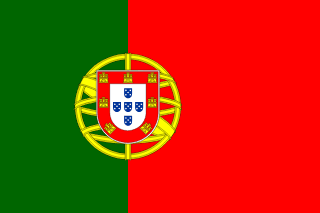
Overview
A global maritime power during the 15th and 16th centuries, Portugal lost much of its wealth and status with the destruction of Lisbon in a 1755 earthquake, occupation during the Napoleonic Wars, and the independence of Brazil, its wealthiest colony, in 1822. A revolution deposed the monarchy in 1910, and for most of the next six decades, repressive governments ran the country. In 1974, a left-wing military coup ushered in broad democratic reforms. The following year, Portugal granted independence to all its African colonies. Portugal is a founding member of NATO and entered the EC (now the EU) in 1986.
Geography
- Location
- Southwestern Europe, bordering the North Atlantic Ocean, west of Spain
- Total Area
- 92,090 sq km
- Climate
- maritime temperate; cool and rainy in north, warmer and drier in south
- Terrain
- the west-flowing Tagus River divides the country: the north is mountainous toward the interior, while the south is characterized by rolling plains
- Natural Resources
- fish, forests (cork), iron ore, copper, zinc, tin, tungsten, silver, gold, uranium, marble, clay, gypsum, salt, arable land, hydropower
- Coastline
- 1,793 km
- Land Borders
- 1,224 km
People & Society
- Population
- 10,194,277 (2025 est.)
- Languages
- Portuguese (official), Mirandese (official, but locally used)
- Religions
- Catholic 68.1%, not applicable 12.9%, no religion 12.0%, no response 2.2%, Protestant 1.8%, other 1.0%; less than 1%: other Christians, Orthodox, Muslim (2021 est.)
- Ethnic Groups
- Portuguese 95%; citizens from Portugal s former colonies in Africa, Asia (Han Chinese), and South America (Brazilian) and other foreign born 5%
- Life Expectancy
- 81.9 years (2024 est.)
- Urbanization
- 67.9% of total population (2023)
Government
- Government Type
- semi-presidential republic
- Capital
- Lisbon
- Independence
- 1143 (Kingdom of Portugal recognized); 1 December 1640 (independence reestablished after 60 years of Spanish rule); 5 October 1910 (republic proclaimed)
- Constitution
- several previous; latest adopted 2 April 1976, effective 25 April 1976
- Legal System
- civil law system; Constitutional Court reviews legislative acts
- Executive Branch
- President Marcelo REBELO DE SOUSA (since 9 March 2016)
Economy
- Economic Overview
- high-income EU and eurozone economy; strong services sector led by tourism and banking; tight labor market; growth driven by private consumption, trade surplus, and public investment from EU funds; declining public debt
- GDP (Official Rate)
- $308.683 billion (2024 est.)
- Major Industries
- textiles, clothing, footwear, wood and cork, paper and pulp, chemicals, fuels and lubricants, automobiles and auto parts, base metals, minerals, porcelain and ceramics, glassware, technology, telecommunications; dairy products, wine, other foodstuffs; ship construction and refurbishment; tourism, plastics, financial services, optics
Infrastructure & Communications
- Railways
- 2,526 km (2020) 1,696 km electrified