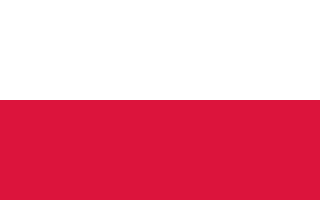
Overview
Poland's history as a state began near the middle of the 10th century. By the mid-16th century, the Polish-Lithuanian Commonwealth ruled a vast tract of land in Central and Eastern Europe. During the 18th century, internal disorder weakened the nation, and in a series of agreements between 1772 and 1795, Russia, Prussia, and Austria partitioned Poland among themselves. Poland regained its independence in 1918 only to be overrun by Germany and the Soviet Union in World War II. It became a Soviet satellite state following the war. Labor turmoil in 1980 led to the formation of the independent trade union Solidarity that over time became a political force with over 10 million members. Free elections in 1989 and 1990 won Solidarity control of the parliament and the presidency, bringing the communist era to a close. A "shock therapy" program during the early 1990s enabled the country to transform its economy into one of the most robust in Central Europe. Poland joined NATO in 1999 and the EU in 2004.
Geography
- Location
- Central Europe, east of Germany
- Total Area
- 312,685 sq km
- Climate
- temperate with cold, cloudy, moderately severe winters with frequent precipitation; mild summers with frequent showers and thundershowers
- Terrain
- mostly flat plain; mountains along southern border
- Natural Resources
- coal, sulfur, copper, natural gas, silver, lead, salt, amber, arable land
- Coastline
- 440 km
- Land Borders
- 2,865 km
People & Society
- Population
- 38,746,310 (2024 est.)
- Religions
- Roman Catholic 70.7%, refused to answer 20.9%, no religion 6.9%; less than 1 percent: Orthodox, Jehovah Witness, Evangelic of Augsburg, Greek Catholic, Pentecostal, other Protestant, not stated, old Catholic Mariavite Church, other Christians, Islam, Buddhist, Polish Catholic Church, other, Baptist Union of Poland, Pagan, Seventh Day Adventist, Hindu, other Catholic (2021 est.)
- Ethnic Groups
- Polish 96.9%, Silesian 1.1%, German 0.2%, Ukrainian 0.1%, other and unspecified 1.7% (2011 est.)
- Life Expectancy
- 76.7 years (2024 est.)
- Urbanization
- 60.2% of total population (2023)
Government
- Government Type
- parliamentary republic
- Capital
- Warsaw
- Independence
- 11 November 1918 (republic proclaimed); notable earlier dates: 14 April 966 (adoption of Christianity, traditional founding date), 1 July 1569 (Polish-Lithuanian Commonwealth created)
- Constitution
- several previous; latest adopted 2 April 1997, approved by referendum 25 May 1997, effective 17 October 1997
- Legal System
- civil law system; judicial review of legislative, administrative, and other governmental acts; constitutional law rulings of the Constitutional Tribunal are final
- Executive Branch
- President Karol NAWROCKI (since 6 August 2025)
Economy
- Economic Overview
- high-income, diversified, EU-member economy; significant growth in GDP, trade, and investment since joining EU in 2004; private consumption and EU-funded public investments driving GDP growth; increased social spending, flooding recovery costs, and defense spending have added to public debt
- GDP (Official Rate)
- $914.696 billion (2024 est.)
- Major Industries
- machine building, iron and steel, coal mining, chemicals, shipbuilding, food processing, glass, beverages, textiles
Infrastructure & Communications
- Railways
- 19,461 km (2020) 11,946 km electrified