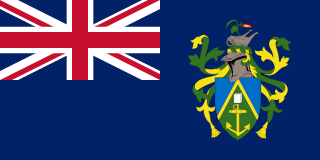
Overview
Polynesians were the first settlers on the four tiny islands that are now called the Pitcairn Islands, but all four were uninhabited by the time Europeans discovered them in 1606. Pitcairn Island -- the only one now inhabited -- was rediscovered by a British explorer in 1767. In 1789, Fletcher CHRISTIAN led a mutiny on the HMS Bounty, and after several months of searching for Pitcairn Island, he landed on it with eight other mutineers and their Tahitian companions. They lived in isolation and evaded detection by English authorities until 1808, when only one man, 10 women, and 23 children remained. In 1831, with the population of 87 proving too big for the island, the British attempted to move all the islanders to Tahiti, but they were soon returned to Pitcairn Island. The island became an official British colony in 1838, and in 1856, the British again determined that the population of 193 was too high and relocated all the residents to Norfolk Island. Several families returned in 1858 and 1864, bringing the island’s population to 43, and almost all of the island’s current population are descendants of these returnees. The UK annexed the nearby uninhabited islands of Henderson, Oeno, and Ducie in 1902 and incorporated them into the Pitcairn Islands colony in 1938. The population peaked at 233 in 1937 as outmigration, primarily to New Zealand, has since thinned the population. Only two children were born between 1986 and 2012, and in 2005, a couple became the first outsiders to obtain citizenship in more than a century. Since 2013, the Pitcairn Islands has tried to attract new migrants but has had no applicants because it requires prospective migrants to front significant sums of money and prohibits employment during a two-year trial period, at which point the local council can deny long-term resident status.
Geography
- Location
- Oceania, islands in the South Pacific Ocean, about midway between Peru and New Zealand
- Total Area
- 47 sq km
- Climate
- tropical; hot and humid; modified by southeast trade winds; rainy season (November to March)
- Terrain
- rugged volcanic formation; rocky coastline with cliffs
- Natural Resources
- miro trees (used for handicrafts), fish
- Coastline
- 51 km
- Land Borders
- 0 km
People & Society
- Population
- 50 (2025 est.)
- Languages
- English (official), Pitkern (mixture of an 18th century English dialect and a Tahitian dialect)
- Religions
- Seventh Day Adventist 100%
- Ethnic Groups
- descendants of the Bounty mutineers and their Tahitian wives
Government
- Government Type
- parliamentary democracy
- Capital
- Adamstown
- Independence
- none (overseas territory of the UK)
- Constitution
- several previous; latest drafted 10 February 2010, presented 17 February 2010, effective 4 March 2010
- Legal System
- local island by-laws
- Executive Branch
- King CHARLES III (since 8 September 2022); represented by UK High Commissioner to New Zealand and Governor (nonresident) of the Pitcairn Islands Iona THOMAS (since 9 August 2022)
Economy
- Economic Overview
- small South Pacific British island territorial economy; exports primarily postage stamps, handicraft goods, honey, and tinctures; extremely limited infrastructure; dependent upon UK and EU aid; recent border reopening post-COVID-19
- Major Industries
- postage stamps, handicrafts, beekeeping, honey