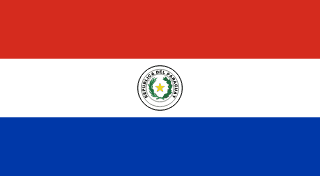
Overview
Several Indigenous groups, principally belonging to the Guarani language family, inhabited the area of modern Paraguay before the arrival of the Spanish in the early 16th century, when the territory was incorporated into the Viceroyalty of Peru. Paraguay achieved its independence from Spain in 1811 with the help of neighboring states. In the aftermath of independence, a series of military dictators ruled the country until 1870. During the disastrous War of the Triple Alliance (1864-70) -- fought against Argentina, Brazil, and Uruguay -- Paraguay lost two thirds of its adult males and much of its territory. The country stagnated economically for the next half-century and experienced a tumultuous series of political regimes. Following the Chaco War of 1932-35 with Bolivia, Paraguay gained a large part of the Chaco lowland region. The 35-year military dictatorship of Alfredo STROESSNER ended in 1989, and Paraguay has held relatively free and regular presidential elections since the country's return to democracy.
Geography
- Location
- Central South America, northeast of Argentina, southwest of Brazil
- Total Area
- 406,752 sq km
- Climate
- subtropical to temperate; substantial rainfall in the eastern portions, becoming semiarid in the far west
- Terrain
- grassy plains and wooded hills east of Rio Paraguay; Gran Chaco region west of Rio Paraguay mostly low, marshy plain near the river, and dry forest and thorny scrub elsewhere
- Natural Resources
- hydropower, timber, iron ore, manganese, limestone
- Coastline
- 0 km (landlocked)
- Land Borders
- 4,655 km
People & Society
- Population
- 7,604,044 (2025 est.)
- Religions
- Roman Catholic 80.4%, Protestant 7% (Evangelical (non-specific) 6.7%, Evangelical Pentecostal 0.1%, Adventist 0.1%, Protestant (non-specific) 0.1%), Believer (not belonging to the church) 5.7%, other 0.6%, agnostic 0.1%, none 0.2%, unspecified 6.2% (2023 est.)
- Ethnic Groups
- Mestizo (mixed Spanish and Indigenous ancestry) 95%, other 5%
- Life Expectancy
- 78.8 years (2024 est.)
- Literacy Rate
- 94.9% (2024 est.)
- Urbanization
- 63.1% of total population (2023)
Government
- Government Type
- presidential republic
- Capital
- Asunci n
- Independence
- 14-15 May 1811 (from Spain)
- Constitution
- several previous; latest approved and promulgated 20 June 1992
- Legal System
- civil law system with influences from Argentine, Spanish, Roman, and French civil law models; Supreme Court of Justice reviews legislative acts
- Executive Branch
- President Santiago PE A Palacios (since 15 August 2023)
Economy
- Economic Overview
- upper middle-income South American economy; COVID-19 hit while still recovering from 2019 Argentina-driven recession; global hydroelectricity leader; major corruption and money-laundering locale; highly agrarian economy; significant income inequality
- GDP (Official Rate)
- $44.458 billion (2024 est.)
- Major Industries
- sugar processing, cement, textiles, beverages, wood products, steel, base metals, electric power
Infrastructure & Communications
- Railways
- 30 km (2014)