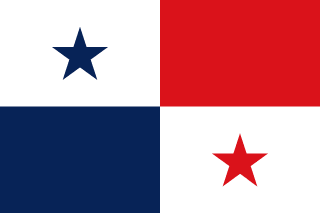
Overview
Explored and settled by the Spanish in the 16th century, Panama broke with Spain in 1821 and joined a union of Colombia, Ecuador, and Venezuela that was named the Republic of Gran Colombia. When the union dissolved in 1830, Panama remained part of Colombia. With US backing, Panama seceded from Colombia in 1903 and promptly signed a treaty with the US allowing for the construction of a canal and US sovereignty over a strip of land known as the Panama Canal Zone on either side of the structure. The US Army Corps of Engineers built the Panama Canal between 1904 and 1914. In 1977, an agreement was signed for the complete transfer of the Canal from the US to Panama by the end of the century. Certain portions of the Zone and increasing responsibility over the Canal were turned over in the subsequent decades. With US help, Panamanian dictator Manuel NORIEGA was deposed in 1989. The entire Panama Canal, the area supporting the Canal, and remaining US military bases were transferred to Panama by the end of 1999. An ambitious expansion project to more than double the Canal's capacity by allowing for more Canal transits and larger ships was carried out between 2007 and 2016.
Geography
- Location
- Central America, bordering both the Caribbean Sea and the North Pacific Ocean, between Colombia and Costa Rica
- Total Area
- 75,420 sq km
- Climate
- tropical maritime; hot, humid, cloudy; prolonged rainy season (May to January), short dry season (January to May)
- Terrain
- interior mostly steep, rugged mountains with dissected, upland plains; coastal plains with rolling hills
- Natural Resources
- copper, mahogany forests, shrimp, hydropower
- Coastline
- 2,490 km
- Land Borders
- 687 km
People & Society
- Population
- 4,536,008 (2025 est.)
- Religions
- Evangelical 55%, Roman Catholic 33.4%, none 10.1%, unspecified 1.5% (2023 est.)
- Ethnic Groups
- Mestizo (mixed Indigenous and White) 65%, Indigenous 12.3% (Ngabe 7.6%, Kuna 2.4%, Embera 0.9%, Bugle 0.8%, other 0.4%, unspecified 0.2%), Black or African descent 9.2%, Mulatto 6.8%, White 6.7% (2010 est.)
- Life Expectancy
- 79.2 years (2024 est.)
- Literacy Rate
- 96.3% (2024 est.)
- Urbanization
- 69.5% of total population (2023)
Government
- Government Type
- presidential republic
- Capital
- Panama City
- Independence
- 3 November 1903 (from Colombia); 28 November 1821 (from Spain)
- Constitution
- several previous; latest effective 11 October 1972
- Legal System
- civil law system; Supreme Court of Justice reviews legislative acts
- Executive Branch
- President Jos Ra l MULINO Quintero (since 1 July 2024)
Economy
- Economic Overview
- upper middle-income Central American economy; increasing Chinese trade; US dollar user; canal expansion fueling broader infrastructure investment; services sector dominates economy; historic money-laundering and illegal drug hub
- GDP (Official Rate)
- $86.26 billion (2024 est.)
- Major Industries
- construction, brewing, cement and other construction materials, sugar milling
Infrastructure & Communications
- Railways
- 77 km (2014)