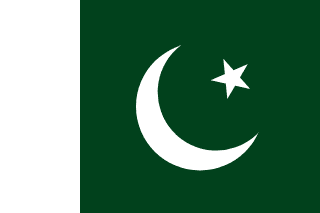
Overview
The Indus Valley civilization, one of the oldest in the world and dating back at least 5,000 years, spread over much of modern-day Pakistan. During the second millennium B.C., remnants of this culture fused with the migrating Indo-Aryan peoples. The area underwent successive invasions in subsequent centuries from the Persians, Greeks, Scythians, Arabs (who brought Islam), Afghans, and Turks. The Mughal Empire flourished in the 16th and 17th centuries; the British came to dominate the region in the 18th century. The partition in 1947 of British India into the Muslim state of Pakistan (with West and East sections) and largely Hindu India created lasting tension between the two countries. They have fought two wars and a limited conflict -- in 1947-48, 1965, and 1999 respectively -- over the Kashmir territory, a dispute that continues to this day. A third war in 1971 -- in which India assisted an indigenous movement reacting to Bengali marginalization in Pakistani politics -- resulted in East Pakistan becoming the separate nation of Bangladesh. In response to Indian nuclear weapons testing, Pakistan conducted its own tests in 1998. Pakistan has been engaged in a decades-long armed conflict with militant groups, including the Tehreek-e-Taliban Pakistan (TTP) and other militant networks that target government institutions and civilians.
Geography
- Location
- Southern Asia, bordering the Arabian Sea, between India on the east and Iran and Afghanistan on the west and China in the north
- Total Area
- 796,095 sq km
- Climate
- mostly hot, dry desert; temperate in northwest; arctic in north
- Terrain
- divided into three major geographic areas: the northern highlands, the Indus River plain in the center and east, and the Balochistan Plateau in the south and west
- Natural Resources
- arable land, extensive natural gas reserves, limited petroleum, poor quality coal, iron ore, copper, salt, limestone
- Coastline
- 1,046 km
- Land Borders
- 7,257 km
People & Society
- Population
- 257,047,044 (2025 est.)
- Religions
- Muslim 96.4%, Hindu 1.6%, Christian 1.4%; less than 1%: scheduled castes, Qadiani/Ahmadi, other, Sikh. (2020 est.)
- Ethnic Groups
- Punjabi 44.7%, Pashtun (Pathan) 15.4%, Sindhi 14.1%, Saraiki 8.4%, Muhajirs 7.6%, Baloch 3.6%, other 6.3%
- Life Expectancy
- 70.3 years (2024 est.)
- Literacy Rate
- 58.9% (2021 est.)
- Urbanization
- 38% of total population (2023)
Government
- Government Type
- federal parliamentary republic
- Capital
- Islamabad
- Independence
- 14 August 1947 (from British India)
- Constitution
- several previous; latest endorsed 12 April 1973, passed 19 April 1973, entered into force 14 August 1973 (suspended and restored several times)
- Legal System
- common law system with Islamic law influence
- Executive Branch
- President Asif Ali ZARDARI (since 10 March 2024)
Economy
- Economic Overview
- lower middle-income South Asian economy; extremely high debt; endemic corruption; regional disputes with India and Afghanistan hinder investment; falling inflation, IMF relief programs, and strong agricultural output slowly contributing to economic recovery
- GDP (Official Rate)
- $373.072 billion (2024 est.)
- Major Industries
- textiles and apparel, food processing, pharmaceuticals, surgical instruments, construction materials, paper products, fertilizer, shrimp
Infrastructure & Communications
- Railways
- 11,881 km (2021)