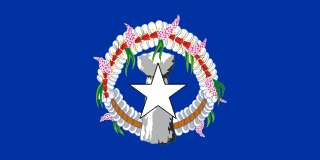
Overview
Austronesian people settled the Northern Mariana Islands around 1500 B.C. These people became the indigenous Chamorro and were influenced by later migrations, including Micronesians in the first century A.D. and island Southeast Asians around 900. Spanish explorer Ferdinand MAGELLAN sailed through the Mariana Islands in 1521, and Spain claimed them in 1565. Spain formally colonized the Mariana Islands in 1668 and administered the archipelago from Guam. Spain’s brutal repression of the Chamorro, along with new diseases and intermittent warfare, reduced the indigenous population by about 90% in the 1700s. With a similar dynamic occurring on Guam, Spain forced the Chamorro from the Northern Mariana Islands to resettle there. By the time they returned, many other Micronesians, including Chuukese and Yapese, had already settled on their islands.In 1898, Spain ceded Guam to the US after the Spanish-American War but sold the Northern Mariana Islands to Germany under the German-Spanish Treaty of 1899. Germany administered the territory from German New Guinea but took a hands-off approach to day-to-day life. Following World War I, Japan administered the islands under a League of Nations mandate. Japan focused on sugar production and brought in thousands of Japanese laborers, who quickly outnumbered the Chamorro on the islands. During World War II, Japan invaded Guam from the Northern Mariana Islands and used Marianan Chamorro as translators with Guamanian Chamorro, creating friction between the two Chamorro communities that continues to this day. The US captured the Northern Mariana Islands in 1944 after the Battle of Saipan and later administered them as part of the Trust Territory of the Pacific Islands (TTPI).On four occasions in the 1950s and 1960s, voters opted for integration with Guam, which Guam rejected in 1969. In 1978, the Northern Mariana Islands was granted self-governance separate from the rest of the TTPI, and in 1986, islanders were granted US citizenship, with the territory coming under US sovereignty as the Commonwealth of the Northern Mariana Islands (CNMI). In 2009, the CNMI became the final US territory to elect a nonvoting delegate to the US Congress.
Geography
- Location
- Oceania, islands in the North Pacific Ocean, about three-quarters of the way from Hawaii to the Philippines
- Total Area
- 464 sq km
- Climate
- tropical marine; moderated by northeast trade winds, little seasonal temperature variation; dry season December to June, rainy season July to October
- Terrain
- the southern islands in this north-south trending archipelago are limestone, with fringing coral reefs; the northern islands are volcanic, with active volcanoes on several islands
- Natural Resources
- arable land, fish
- Coastline
- 1,482 km
- Land Borders
- 0 km
People & Society
- Population
- 51,118 (2024 est.)
- Languages
- Philippine languages 32.8%, Chamorro (official) 24.1%, English (official) 17%, other Pacific island languages 10.1% (includes Carolinian (official), Chinese 6.8%, other Asian languages 7.3%, other 1.9% (2010 est.)
- Religions
- Christian (Roman Catholic majority, although traditional beliefs and taboos may still be found)
- Ethnic Groups
- Asian 50% (includes Filipino 35.3%, Chinese 6.8%, Korean 4.2%, and other Asian 3.7%), Native Hawaiian or other Pacific Islander 34.9% (includes Chamorro 23.9%, Carolinian 4.6%, and other Native Hawaiian or Pacific Islander 6.4%), other 2.5%, two or more ethnicities or races 12.7% (2010 est.)
- Life Expectancy
- 77.1 years (2024 est.)
- Urbanization
- 92.1% of total population (2023)
Government
- Government Type
- a commonwealth in political union with and under the sovereignty of the US; republican form of government with separate executive, legislative, and judicial branches
- Capital
- Saipan
- Independence
- none (commonwealth in political union with the US)
- Constitution
- partially effective 9 January 1978 (Constitution of the Commonwealth of the Northern Mariana Islands); fully effective 4 November 1986 (Covenant Agreement)
- Legal System
- the laws of the US apply, except for customs and some aspects of taxation
- Executive Branch
- President Donald J. TRUMP (since 20 January 2025)
Economy
- Economic Overview
- US Pacific island commonwealth economy; growing Chinese and Korean tourist destination; hit hard by 2018 typhoon; dependent on energy imports; exempt from some US labor and immigration laws; longstanding garment production
- GDP (Official Rate)
- $1.096 billion (2022 est.)
- Major Industries
- tourism, banking, construction, fishing, handicrafts, other services