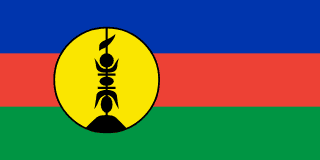
Overview
The first humans settled in New Caledonia around 1600 B.C. The Lapita were skilled navigators, and evidence of their pottery around the Pacific has served as a guide for understanding human expansion in the region. Successive waves of migrants from other islands in Melanesia intermarried with the Lapita, giving rise to the Kanak ethnic group considered indigenous to New Caledonia. British explorer James COOK was the first European to visit New Caledonia in 1774, giving it the Latin name for Scotland. Missionaries first landed in New Caledonia in 1840. In 1853, France annexed New Caledonia to preclude any British attempt to claim the island. France declared it a penal colony in 1864 and sent more than 20,000 prisoners to New Caledonia in the ensuing three decades.Nickel was discovered in 1864, and French prisoners were directed to mine it. France brought in indentured servants and enslaved labor from elsewhere in Southeast Asia to work the mines, blocking Kanaks from accessing the most profitable part of the local economy. In 1878, High Chief ATAI led a rebellion against French rule. The Kanaks were relegated to reservations, leading to periodic smaller uprisings and culminating in a large revolt in 1917 that colonial authorities brutally suppressed. During World War II, New Caledonia became an important base for Allied troops, and the US moved its South Pacific headquarters to the island in 1942. Following the war, France made New Caledonia an overseas territory and granted French citizenship to all inhabitants in 1953, thereby permitting the Kanaks to move off the reservations.The Kanak nationalist movement began in the 1950s, but most voters chose to remain a territory in an independence referendum in 1958. The European population of New Caledonia boomed in the 1970s with a renewed focus on nickel mining, reigniting Kanak nationalism. Key Kanak leaders were assassinated in the early 1980s, leading to escalating violence and dozens of fatalities. The Matignon Accords of 1988 provided for a 10-year transition period. The Noumea Accord of 1998 transferred increasing governing responsibility from France to New Caledonia over a 20-year period and provided for three independence referenda. In the first held in 2018, voters rejected independence by 57% to 43%; in the second held in 2020, voters rejected independence 53% to 47%. In the third referendum held in 2021, voters rejected independence 96% to 4%; however, a boycott by key Kanak groups spurred challenges about the legitimacy of the vote. Pro-independence parties subsequently won a majority in the New Caledonian Government for the first time. France and New Caledonia officials remain in talks about the status of the territory.
Geography
- Location
- Oceania, islands in the South Pacific Ocean, east of Australia
- Total Area
- 18,575 sq km
- Climate
- tropical; modified by southeast trade winds; hot, humid
- Terrain
- coastal plains with interior mountains
- Natural Resources
- nickel, chrome, iron, cobalt, manganese, silver, gold, lead, copper
- Coastline
- 2,254 km
- Land Borders
- 0 km
People & Society
- Population
- 307,612 (2025 est.)
- Religions
- Christian 85.2%, Muslim 2.8%, other 1.6%, unaffiliated 10.4% (2020 est.)
- Ethnic Groups
- Kanak 39.1%, European 27.1%, Wallisian, Futunian 8.2%, Tahitian 2.1%, Indonesian 1.4%, Ni-Vanuatu 1%, Vietnamese 0.9%, other 17.7%, unspecified 2.5% (2014 est.)
- Life Expectancy
- 79.3 years (2024 est.)
- Urbanization
- 72.7% of total population (2023)
Government
- Government Type
- parliamentary democracy (Territorial Congress); an overseas collectivity of France
- Capital
- Noumea
- Independence
- none (overseas collectivity of France)
- Constitution
- 4 October 1958 (French Constitution with changes as reflected in the Noumea Accord of 5 May 1998)
- Legal System
- civil law system based on French civil law
- Executive Branch
- President Emmanuel MACRON (since 14 May 2017); represented by High Commissioner Jacques BILLANT (since 3 May 2025)
Economy
- Economic Overview
- upper-middle-income French Pacific territorial economy; enormous nickel reserves; ongoing French independence negotiations; large Chinese nickel exporter; luxury eco-tourism destination; large French aid recipient; high cost-of-living; lingering wealth disparities
- GDP (Official Rate)
- $10.129 billion (2024 est.)
- Major Industries
- nickel mining and smelting