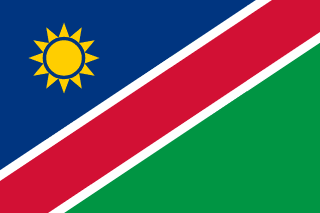
Overview
Various ethnic groups occupied southwestern Africa prior to Germany establishing a colony over most of the territory in 1884. South Africa occupied the colony, then known as German South West Africa, in 1915 during World War I and administered it as a mandate until after World War II, when it annexed the territory. In 1966, the Marxist South-West Africa People's Organization (SWAPO) guerrilla group launched a war of independence for the area that became Namibia, but it was not until 1988 that South Africa agreed to end its administration in accordance with a UN peace plan for the entire region. Namibia gained independence in 1990, and SWAPO has governed it since, although the party has dropped much of its Marxist ideology. President Hage GEINGOB was elected in 2014 in a landslide victory, replacing Hifikepunye POHAMBA, who stepped down after serving two terms. SWAPO retained its parliamentary super majority in the 2014 elections. In 2019 elections, GEINGOB was reelected but by a substantially reduced majority, and SWAPO narrowly lost its super majority in parliament.
Geography
- Location
- Southern Africa, bordering the South Atlantic Ocean, between Angola and South Africa
- Total Area
- 824,292 sq km
- Climate
- desert; hot, dry; rainfall sparse and erratic
- Terrain
- mostly high plateau; Namib Desert along coast; Kalahari Desert in east
- Natural Resources
- diamonds, copper, uranium, gold, silver, lead, tin, lithium, cadmium, tungsten, zinc, salt, hydropower, fish
- Coastline
- 1,572 km
- Land Borders
- 4,220 km
People & Society
- Population
- 2,852,777 (2025 est.)
- Languages
- Oshiwambo languages 49.7%, Nama/Damara 11%, Kavango languages 10.4%, Afrikaans 9.4%, Herero languages 9.2%, Zambezi languages 4.9%, English (official) 2.3%, other African languages 1.5%, other European languages 0.7%, other 1% (2016 est.)
- Religions
- Christian 97.5%, other 0.6% (includes Muslim, Baha'i, Jewish, Buddhist), unaffiliated 1.9% (2020 est.)
- Ethnic Groups
- Ovambo 50%, Kavangos 9%, Herero 7%, Damara 7%, mixed European and African ancestry 6.5%, European 6%, Nama 5%, Caprivian 4%, San 3%, Baster 2%, Tswana 0.5%
- Life Expectancy
- 65.9 years (2024 est.)
- Literacy Rate
- 87.6% (2023 est.)
- Urbanization
- 54.9% of total population (2023)
Government
- Government Type
- presidential republic
- Capital
- Windhoek
- Independence
- 21 March 1990 (from South African mandate)
- Constitution
- adopted 9 February 1990, entered into force 21 March 1990
- Legal System
- mixed system of uncodified civil law based on Roman-Dutch law and customary law
- Executive Branch
- President Netumbo NANDI-NDAITWAH (since 21 March 2025)
Economy
- Economic Overview
- upper middle-income, export-driven Sub-Saharan economy; natural resource rich; Walvis Bay port expansion for trade; high potential for renewable power generation and energy independence; major nature-based tourist locale; natural resource rich; shortage of skilled labor
- GDP (Official Rate)
- $13.372 billion (2024 est.)
- Major Industries
- mining, tourism, fishing, agriculture
Infrastructure & Communications
- Railways
- 2,628 km (2014)