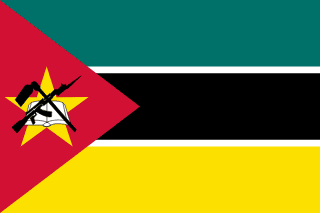
Overview
In the first half of the second millennium A.D., northern Mozambican port towns were frequented by traders from Somalia, Ethiopia, Egypt, Arabia, Persia, and India. The Portuguese were able to wrest much of the coastal trade from Arab Muslims in the centuries after 1500, and they set up their own colonies. Portugal did not relinquish Mozambique until 1975. Large-scale emigration, economic dependence on South Africa, a severe drought, and a prolonged civil war hindered the country's development until the mid-1990s. The ruling Front for the Liberation of Mozambique (FRELIMO) party formally abandoned Marxism in 1989, and a new constitution the following year provided for multiparty elections and a free-market economy. A UN-negotiated peace agreement between FRELIMO and rebel Mozambique National Resistance (RENAMO) forces ended the fighting in 1992. In 2004, Mozambique underwent a delicate transition as Joaquim CHISSANO stepped down after 18 years in office. His elected successor, Armando GUEBUZA, served two terms and then passed executive power to Filipe NYUSI in 2015. RENAMO’s residual armed forces intermittently engaged in a low-level insurgency after 2012, but a 2016 cease-fire eventually led to the two sides signing a comprehensive peace deal in 2019. Since 2017, violent extremists -- who an official ISIS media outlet recognized as ISIS's network in Mozambique for the first time in 2019 -- have been conducting attacks against civilians and security services in the northern province of Cabo Delgado. In 2021, Rwanda and the Southern African Development Community deployed forces to support Mozambique’s efforts to counter the extremist group.
Geography
- Location
- Southeastern Africa, bordering the Mozambique Channel, between South Africa and Tanzania
- Total Area
- 799,380 sq km
- Climate
- tropical to subtropical
- Terrain
- mostly coastal lowlands, uplands in center, high plateaus in northwest, mountains in west
- Natural Resources
- coal, titanium, natural gas, hydropower, tantalum, graphite
- Coastline
- 2,470 km
- Land Borders
- 4,783 km
People & Society
- Population
- 34,206,144 (2025 est.)
- Languages
- Makhuwa 26.1%, Portuguese (official) 16.6%, Tsonga 8.6%, Nyanja 8.1, Sena 7.1%, Lomwe 7.1%, Chuwabo 4.7%, Ndau 3.8%, Tswa 3.8%, other Mozambican languages 11.8%, other 0.5%, unspecified 1.8% (2017 est.)
- Religions
- Catholic 27.3%, Islam 19.1%, Pentecostal 16.7%, Saio/Zione 16.3%, no religion 13.5%, other 4.3%, Anglican 1.7%, unknown 1.2% (2017 est.)
- Ethnic Groups
- African 99% (Makhuwa, Tsonga, Lomwe, Sena, and others), Mestizo 0.8%, other (includes European, Indian, Pakistani, Chinese) 0.2% (2017 est.)
- Life Expectancy
- 58.3 years (2024 est.)
- Literacy Rate
- 61.7% (2022 est.)
- Urbanization
- 38.8% of total population (2023)
Government
- Government Type
- presidential republic
- Capital
- Maputo
- Independence
- 25 June 1975 (from Portugal)
- Constitution
- previous 1975, 1990; latest adopted 16 November 2004, effective 21 December 2004
- Legal System
- mixed system of Portuguese civil law and customary law
- Executive Branch
- President Daniel Francisco CHAPO (since 15 January 2025)
Economy
- Economic Overview
- low-income East African economy; subsistence farming dominates labor force; return to growth led by agriculture and extractive industries; Islamist insurgency threatens natural gas projects in north; ongoing foreign debt restructuring and resolution under IMF Highly Indebted Poor Countries (HIPC) initiative
- GDP (Official Rate)
- $22.417 billion (2024 est.)
- Major Industries
- aluminum, petroleum products, chemicals (fertilizer, soap, paints), textiles, cement, glass, asbestos, tobacco, food, beverages
Infrastructure & Communications
- Railways
- 4,787 km (2014)