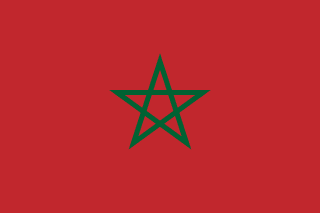
Overview
In 788, about a century after the Arab conquest of North Africa, a series of Muslim dynasties began to rule in Morocco. In the 16th century, the Sa'adi monarchy, particularly under Ahmad al-MANSUR (1578-1603), repelled foreign invaders and inaugurated a golden age. The Alaouite Dynasty, to which the current Moroccan royal family belongs, dates from the 17th century. In 1860, Spain occupied northern Morocco and ushered in a half-century of trade rivalry among European powers that saw Morocco's sovereignty steadily erode; in 1912, the French imposed a protectorate over the country. A protracted independence struggle with France ended successfully in 1956. The internationalized city of Tangier and most Spanish possessions were turned over to the new country that same year. Sultan MOHAMMED V, the current monarch's grandfather, organized the new state as a constitutional monarchy and in 1957 assumed the title of king. Since Spain's 1976 withdrawal from Western Sahara, Morocco has extended its de facto administrative control to roughly 75% of this territory; however, the UN does not recognize Morocco as the administering power for Western Sahara. The UN since 1991 has monitored a cease-fire, which broke down in late 2020, between Morocco and the Polisario Front -- an organization advocating the territory’s independence -- and restarted negotiations over the status of the territory in 2018. In 2020, the US recognized Morocco's sovereignty over all of Western Sahara. In 2011, King MOHAMMED VI responded to the spread of pro-democracy protests in the North Africa region by implementing a reform program that included a new constitution, passed by popular referendum, under which some new powers were extended to parliament and the prime minister, but ultimate authority remains in the hands of the monarch. Later that year, the Justice and Development Party (PJD) -- a moderate Islamist democratic party -- won the largest number of seats in parliamentary elections, becoming the first Islamist party to lead the Moroccan Government. In 2015, Morocco held its first direct elections for regional councils, which was one of the reforms included in the 2011 constitution. The PJD again won the largest number of seats in nationwide parliamentary elections in 2016, but it lost its plurality to the probusiness National Rally of Independents (RNI) in 2021. In 2020, Morocco signed a normalization agreement with Israel, similar to those that Bahrain, the United Arab Emirates, and Sudan had concluded with Israel earlier that year.
Geography
- Location
- Northern Africa, bordering the North Atlantic Ocean and the Mediterranean Sea, between Algeria and Mauritania
- Total Area
- 716,550 sq km
- Climate
- Mediterranean in the north, becoming more extreme in the interior; in the south, hot, dry desert; rain is rare; cold offshore air currents produce fog and heavy dew
- Terrain
- mountainous northern coast (Rif Mountains) and interior (Atlas Mountains) bordered by large plateaus with intermontane valleys, and fertile coastal plains; the south is mostly low, flat desert with large areas of rocky or sandy surfaces
- Natural Resources
- phosphates, iron ore, manganese, lead, zinc, fish, salt
- Coastline
- 2,945 km
- Land Borders
- 3,523.5 km
People & Society
- Population
- 37,387,585 (2024 est.)
- Religions
- Muslim 99% (official; virtually all Sunni, 0.1% Shia), other 1% (includes Christian, Jewish, and Baha'i); note - Jewish about 3,000-3,500 (2020 est.)
- Ethnic Groups
- Arab-Amazigh 99%, other 1%
- Life Expectancy
- 74.2 years (2024 est.)
- Urbanization
- 65.1% of total population (2023)
Government
- Government Type
- parliamentary constitutional monarchy
- Capital
- Rabat
- Independence
- 2 March 1956 (from France)
- Constitution
- several previous; latest drafted 17 June 2011, approved by referendum 1 July 2011
- Legal System
- mixed system of civil law based on French civil law and Islamic (sharia) law; Constitutional Court reviews legislative acts
- Executive Branch
- King MOHAMMED VI (since 30 July 1999)
Economy
- Economic Overview
- lower middle-income North African economy; ongoing recovery from recent drought and earthquake; rebounding via tourism, manufacturing, and raw materials processing; significant trade and investment with EU; reform programs include fiscal rebalancing, state enterprise governance and private sector investments
- GDP (Official Rate)
- $154.431 billion (2024 est.)
- Major Industries
- automotive parts, phosphate mining and processing, aerospace, food processing, leather goods, textiles, construction, energy, tourism
Infrastructure & Communications
- Railways
- 2,067 km (2014)