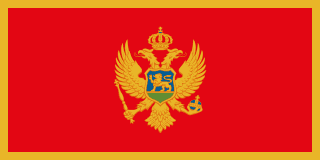
Overview
The use of the name Crna Gora or Black Mountain (Montenegro) began in the 13th century in reference to a highland region in the Serbian province of Zeta. Under Ottoman control beginning in 1496, Montenegro was a semi-autonomous theocracy ruled by a series of bishop princes until 1852, when it became a secular principality. Montenegro fought a series of wars with the Ottomans and eventually won recognition as an independent sovereign principality at the Congress of Berlin in 1878. In 1918, the country was absorbed by the Kingdom of Serbs, Croats, and Slovenes, which became the Kingdom of Yugoslavia in 1929. At the end of World War II, Montenegro joined the Socialist Federal Republic of Yugoslavia (SFRY). When the SFRY dissolved in 1992, Montenegro and Serbia created the Federal Republic of Yugoslavia (FRY), which shifted in 2003 to a looser State Union of Serbia and Montenegro. Montenegro voted to restore its independence on 3 June 2006. Montenegro became an official EU candidate in 2010 and joined NATO in 2017.
Geography
- Location
- Southeastern Europe, between the Adriatic Sea and Serbia
- Total Area
- 13,812 sq km
- Climate
- Mediterranean climate, hot dry summers and autumns and relatively cold winters with heavy snowfalls inland
- Terrain
- highly indented coastline with narrow coastal plain backed by rugged high limestone mountains and plateaus
- Natural Resources
- bauxite, hydroelectricity
- Coastline
- 293.5 km
- Land Borders
- 680 km
People & Society
- Population
- 599,849 (2024 est.)
- Religions
- Orthodox 72.1%, Muslim 19.1%, Catholic 3.4%, atheist 1.2%, other 1.5%, unspecified 2.6% (2011 est.)
- Ethnic Groups
- Montenegrin 45%, Serbian 28.7%, Bosniak 8.7%, Albanian 4.9%, Muslim 3.3%, Romani 1%, Croat 1%, other 2.6%, unspecified 4.9% (2011 est.)
- Life Expectancy
- 78.2 years (2024 est.)
- Literacy Rate
- 98.5% (2018 est.)
- Urbanization
- 68.5% of total population (2023)
Government
- Government Type
- parliamentary republic
- Capital
- Podgorica
- Independence
- 3 June 2006 (from the State Union of Serbia and Montenegro); notable earlier dates: 13 March 1852 (Principality of Montenegro established); 13 July 1878 (Congress of Berlin recognizes Montenegrin independence); 28 August 1910 (Kingdom of Montenegro established)
- Constitution
- several previous; latest adopted 22 October 2007
- Legal System
- civil law
- Executive Branch
- President Jakov MILATOVIC (since 20 May 2023)
Economy
- Economic Overview
- upper-middle-income, small Balkan economy; uses euro as de facto currency; reduced growth due to slowdown in tourism and industrial production; new impetus for EU accession under Europe Now government; energy price cap and declining food and services prices easing inflation rate
- GDP (Official Rate)
- $8.07 billion (2024 est.)
- Major Industries
- steelmaking, aluminum, agricultural processing, consumer goods, tourism
Infrastructure & Communications
- Railways
- 250 km (2017)