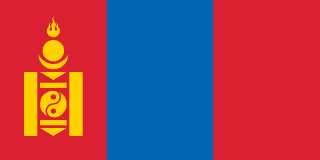
Overview
The peoples of Mongolia have a long history under a number of nomadic empires dating back to the Xiongnu in the 4th century B.C., and the name Mongol goes back to at least the 11th century A.D. The most famous Mongol, TEMÜÜJIN (aka Genghis Khan), emerged as the ruler of all Mongols in the early 1200s. By the time of his death in 1227, he had created through conquest a Mongol Empire that extended across much of Eurasia. His descendants, including ÖGÖDEI and KHUBILAI (aka Kublai Khan), continued to conquer Eastern Europe, the Middle East, and the rest of China, where KHUBILAI established the Yuan Dynasty in the 1270s. The Mongols attempted to invade Japan and Java before their empire broke apart in the 14th century. In the 17th century, Mongolia fell under the rule of the Manchus of the Chinese Qing Dynasty. After Manchu rule collapsed in 1911, Mongolia declared independence, finally winning it in 1921 with help from the Soviet Union. Mongolia became a socialist state (the Mongolian People’s Republic) in 1924. Until the collapse of the Soviet Union in 1989, Mongolia was a Soviet satellite state and relied heavily on economic, military, and political assistance from Moscow. The period was also marked by purges, political repression, economic stagnation, and tensions with China. Mongolia peacefully transitioned to an independent democracy in 1990. In 1992, it adopted a new constitution and established a free-market economy. Since the country's transition, it has conducted a series of successful presidential and legislative elections. Throughout the period, the ex-communist Mongolian People's Revolutionary Party -- which took the name Mongolian People’s Party (MPP) in 2010 -- has competed for political power with the Democratic Party and several other smaller parties. For most of its democratic history, Mongolia has had a divided government, with the presidency and the parliamentary majority held by different parties but that changed in 2021, when the MPP won the presidency after having secured a supermajority in parliament in 2020. Mongolia’s June 2021 presidential election delivered a decisive victory for MPP candidate Ukhnaagiin KHURELSUKH. Mongolia maintains close cultural, political, and military ties with Russia, while China is its largest economic partner. Mongolia’s foreign relations are focused on preserving its autonomy by balancing relations with China and Russia, as well as its other major partners, Japan, South Korea, and the US.
Geography
- Location
- Northern Asia, between China and Russia
- Total Area
- 1,564,116 sq km
- Climate
- desert; continental (large daily and seasonal temperature ranges)
- Terrain
- vast semidesert and desert plains, grassy steppe, mountains in west and southwest; Gobi Desert in south-central
- Natural Resources
- oil, coal, copper, molybdenum, tungsten, phosphates, tin, nickel, zinc, fluorspar, gold, silver, iron
- Coastline
- 0 km (landlocked)
- Land Borders
- 8,082 km
People & Society
- Population
- 3,281,676 (2024 est.)
- Religions
- Buddhist 51.8%, no religion 40.6%, Muslim 3.2%, Shaman 2.5%, Christian 1.3%, Other 0.6% (2020 est.)
- Ethnic Groups
- Khalkh 83.8%, Kazak 3.8%, Durvud 2.6%, Bayad 2%, Buriad 1.4%, Zakhchin 1.2%, Dariganga 1.1%, other 4.1% (2020 est.)
- Life Expectancy
- 71.9 years (2024 est.)
- Literacy Rate
- 98.6% (2023 est.)
- Urbanization
- 69.1% of total population (2023)
Government
- Government Type
- semi-presidential republic
- Capital
- Ulaanbaatar
- Independence
- 29 December 1911 (independence declared from China; in actuality, autonomy attained); 11 July 1921 (from China)
- Constitution
- several previous; latest adopted 13 January 1992, effective 12 February 1992
- Legal System
- civil law system influenced by Soviet and Romano-Germanic systems; constitution ambiguous on judicial review of legislative acts
- Executive Branch
- President Ukhnaagiin KHURELSUKH (since 25 June 2021)
Economy
- Economic Overview
- lower middle-income East Asian economy; large human capital improvements over last 3 decades; agricultural and natural resource rich; export and consumption-led growth; high inflation due to supply bottlenecks and increased food and energy prices; currency depreciation
- GDP (Official Rate)
- $23.586 billion (2024 est.)
- Major Industries
- construction and construction materials; mining (coal, copper, molybdenum, fluorspar, tin, tungsten, gold); oil; food and beverages; processing of animal products, cashmere and natural fiber manufacturing
Infrastructure & Communications
- Railways
- 1,815 km (2017)