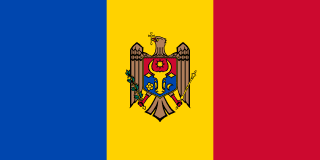
Overview
A large portion of present-day Moldovan territory became a province of the Russian Empire in 1812 and then unified with Romania in 1918 in the aftermath of World War I. This territory was then incorporated into the Soviet Union at the close of World War II. Although Moldova has been independent from the Soviet Union since 1991, Russian forces have remained on Moldovan territory east of the Nistru River in the breakaway region of Transnistria. Years of Communist Party rule in Moldova from 2001 to 2009 ultimately ended with election-related violent protests and a rerun of parliamentary elections in 2009. A series of pro-Europe ruling coalitions governed Moldova from 2010 to 2019, but pro-Russia candidate Igor DODON won the presidency in 2016, and his Socialist Party of the Republic of Moldova won a plurality in the legislative election in 2019. Pro-EU reformist candidate Maia SANDU defeated DODON in his reelection bid in 2020, and SANDU's Party of Action and Solidarity won a parliamentary majority in an early legislative election in 2021. Prime Minister Natalia GAVRILITA and her cabinet took office in 2021. In early 2023, Moldova's parliament confirmed a new cabinet led by Prime Minister Dorin RECEAN, which retained the majority of the former ministers.
Geography
- Location
- Eastern Europe, northeast of Romania
- Total Area
- 33,851 sq km
- Climate
- moderate winters, warm summers
- Terrain
- rolling steppe, gradual slope south to Black Sea
- Natural Resources
- lignite, phosphorites, gypsum, limestone, arable land
- Coastline
- 0 km (landlocked)
- Land Borders
- 1,885 km
People & Society
- Population
- 3,578,930 (2025 est.)
- Religions
- Orthodox 90.1%, other Christian 2.6%, other 0.1%, agnostic 0.1%, atheist 0.2%, unspecified 6.9% (2014 est.)
- Ethnic Groups
- Moldovan 75.1%, Romanian 7%, Ukrainian 6.6%, Gagauz 4.6%, Russian 4.1%, Bulgarian 1.9%, other 0.8% (2014 est.)
- Life Expectancy
- 70.1 years (2024 est.)
- Urbanization
- 43.4% of total population (2023)
Government
- Government Type
- parliamentary republic
- Capital
- Chisinau in Romanian (Kishinev in Russian)
- Independence
- 27 August 1991 (from the Soviet Union)
- Constitution
- previous 1978; latest adopted 29 July 1994, effective 27 August 1994
- Legal System
- civil law system with Germanic law influences; Constitutional Court reviews legislative acts
- Executive Branch
- President Maia SANDU (since 24 December 2020)
Economy
- Economic Overview
- upper middle-income Eastern European economy; sustained growth reversed by COVID-19; significant remittances; Russian energy and regional dependence; agricultural exporter; declining workforce due to emigration and low fertility
- GDP (Official Rate)
- $18.2 billion (2024 est.)
- Major Industries
- sugar processing, vegetable oil, food processing, agricultural machinery; foundry equipment, refrigerators and freezers, washing machines; hosiery, shoes, textiles
Infrastructure & Communications
- Railways
- 1,171 km (2014)