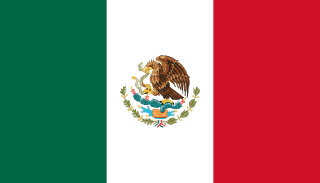
Overview
Mexico was the site of several advanced Amerindian civilizations -- including the Olmec, Toltec, Teotihuacan, Zapotec, Maya, and Aztec -- until Spain conquered and colonized the area in the early 16th century. Administered as the Viceroyalty of New Spain for three centuries, it achieved independence early in the 19th century. Elections held in 2000 marked the first time since Mexican Revolution in 1910 that an opposition candidate -- Vicente FOX of the National Action Party (PAN) -- defeated the party in government, the Institutional Revolutionary Party (PRI). He was succeeded in 2006 by another PAN candidate Felipe CALDERON, but Enrique PEÑA NIETO regained the presidency for the PRI in 2012. Left-leaning anti-establishment politician and former mayor of Mexico City (2000-05) Andrés Manuel LÓPEZ OBRADOR, from the National Regeneration Movement (MORENA), became president in 2018. The US-Mexico-Canada Agreement (USMCA, or T-MEC by its Spanish acronym) entered into force in 2020 and replaced its predecessor, the North American Free Trade Agreement (NAFTA). Mexico amended its constitution in 2019 to facilitate the implementation of the labor components of USMCA. Mexico is currently the US's second-largest goods trading partner, after Canada. Ongoing economic and social concerns include low real wages, high underemployment, inequitable income distribution, and few advancement opportunities, particularly for the largely indigenous population in the impoverished southern states. Since 2007, Mexico's powerful transnational criminal organizations have engaged in a struggle to control criminal markets, resulting in tens of thousands of drug-related homicides and forced disappearances.
Geography
- Location
- North America, bordering the Caribbean Sea and the Gulf of America, between Belize and the United States and bordering the North Pacific Ocean, between Guatemala and the United States
- Total Area
- 1,964,375 sq km
- Climate
- varies from tropical to desert
- Terrain
- high, rugged mountains; low coastal plains; high plateaus; desert
- Natural Resources
- petroleum, silver, antimony, copper, gold, lead, zinc, natural gas, timber
- Coastline
- 9,330 km
- Land Borders
- 4,389 km
People & Society
- Population
- 130,739,927 (2024 est.)
- Religions
- Catholic 77.7%, no religion 10.6%, other Evangelical Churches 7.5%, Jehovah Witness 1.2%; less than 1 percent: Pentecostal, Seventh Day Adventist, Historics, not specified, Latter Day Saints, other religions (2020 est.)
- Ethnic Groups
- Mestizo (Indigenous-Spanish) 62%, predominantly Indigenous 21%, Indigenous 7%, other 10% (mostly European) (2012 est.)
- Life Expectancy
- 74.6 years (2024 est.)
- Literacy Rate
- 95% (2020 est.)
- Urbanization
- 81.6% of total population (2023)
Government
- Government Type
- federal presidential republic
- Capital
- Mexico City (Ciudad de Mexico)
- Independence
- 16 September 1810 (declared independence from Spain); 27 September 1821 (recognized by Spain)
- Constitution
- several previous; latest approved 5 February 1917
- Legal System
- civil law system with US constitutional law influence; judicial review of legislative acts
- Executive Branch
- President Claudia SHEINBAUM Pardo (since 1 October 2024)
Economy
- Economic Overview
- upper-middle-income economy; highly integrated with US via trade and nearshore manufacturing; weak domestic demand, fiscal consolidation, and trade uncertainty contributing to sluggish growth; low unemployment; challenges from income inequality, corruption, and cartel-based violence
- GDP (Official Rate)
- $1.853 trillion (2024 est.)
- Major Industries
- food and beverages, tobacco, chemicals, iron and steel, petroleum, mining, textiles, clothing, motor vehicles, consumer durables, tourism
Infrastructure & Communications
- Railways
- 23,389 km (2017)