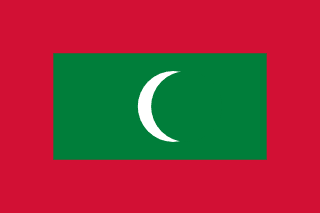
Overview
A sultanate since the 12th century, the Maldives became a British protectorate in 1887 and a republic in 1968, three years after independence. President Maumoon Abdul GAYOOM dominated Maldives' political scene for 30 years, elected to six successive terms by single-party referendums. After political demonstrations in the capital Male in 2003, GAYOOM and his government pledged to embark upon a process of liberalization and democratic reforms, including a more representative political system and expanded political freedoms. Political parties were legalized in 2005. In 2008, a constituent assembly -- termed the "Special Majlis" -- finalized a new constitution ratified by GAYOOM. The first-ever presidential elections under a multi-candidate, multi-party system were held later that year. GAYOOM was defeated in a runoff by Mohamed NASHEED, a political activist whom the regime had jailed several years earlier. In 2012, after several weeks of street protests in response to a top judge's arrest, NASHEED resigned the presidency and handed over power to Vice President Mohammed WAHEED Hassan Maniku. A government-appointed Commission of National Inquiry concluded that there was no evidence of a coup, but NASHEED contended that police and military personnel forced him to resign. NASHEED, WAHEED, and Abdulla YAMEEN Abdul Gayoom ran in the 2013 elections with YAMEEN ultimately winning the presidency after three rounds of voting. In 2018, YAMEEN lost his reelection bid to parliamentarian Ibrahim Mohamed SOLIH. YAMEEN was arrested and jailed in 2022 on corruption charges. Maldives' fourth democratic election was held in September 2023. The winner, Male City Mayor Dr. Mohamed MUIZZU, campaigned on a platform of Maldivian sovereignty, vowing to remove Indian military personnel from the country. MUIZZU represents a joint Progressive Pary of Maldives and People's National Congress (PPM/PNC) coalition.
Geography
- Location
- Southern Asia, group of atolls in the Indian Ocean, south-southwest of India
- Total Area
- 298 sq km
- Climate
- tropical; hot, humid; dry, northeast monsoon (November to March); rainy, southwest monsoon (June to August)
- Terrain
- flat coral atolls, with white sandy beaches; sits atop the submarine volcanic Chagos-Laccadive Ridge
- Natural Resources
- fish
- Coastline
- 644 km
- Land Borders
- 0 km
People & Society
- Population
- 388,858 (2024 est.)
- Languages
- Dhivehi (official, closely related to Sinhala, script derived from Arabic), English (spoken by most government officials)
- Religions
- Sunni Muslim (official)
- Ethnic Groups
- homogeneous mixture of Sinhalese, Dravidian, Arab, Australasian, and African resulting from historical changes in regional hegemony over marine trade routes
- Life Expectancy
- 77.4 years (2024 est.)
- Literacy Rate
- 98.2% (2019 est.)
- Urbanization
- 42% of total population (2023)
Government
- Government Type
- presidential republic
- Capital
- Mal
- Independence
- 26 July 1965 (from the UK)
- Constitution
- many previous; latest ratified 7 August 2008
- Legal System
- Islamic (sharia) legal system with English common law influences, primarily in commercial matters
- Executive Branch
- President Mohamed MUIZZU (since 17 November 2023)
Economy
- Economic Overview
- upper middle-income Indian Ocean island economy; major tourism, fishing, and shipping industries; high public debt; systemic corruption; crippled by COVID-19; ongoing deflation; poverty has tripled since pandemic began
- GDP (Official Rate)
- $6.975 billion (2024 est.)
- Major Industries
- tourism, fish processing, shipping, boat building, coconut processing, woven mats, rope, handicrafts, coral and sand mining