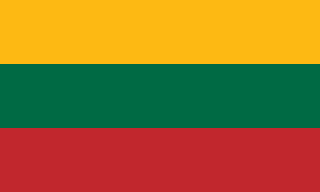
Overview
Lithuanian lands were united under MINDAUGAS in 1236; over the next century, Lithuania extended its territory through alliances and conquest to include most of present-day Belarus and Ukraine. By the end of the 14th century, Lithuania was the largest state in Europe. An alliance with Poland in 1386 led the two countries into a union through a common ruler. In 1569, Lithuania and Poland formally united into a single dual state, the Polish-Lithuanian Commonwealth. This entity survived until 1795 when surrounding countries partitioned its remnants. Lithuania regained its independence after World War I, but the USSR annexed it in 1940 -- an action never recognized by the US and many other countries. In 1990, Lithuania became the first of the Soviet republics to declare its independence, but Moscow did not recognize this proclamation until 1991. The last Russian troops withdrew in 1993. Lithuania subsequently restructured its economy for integration into West European institutions; it joined both NATO and the EU in 2004. In 2015, Lithuania joined the euro zone, and it joined the Organization for Economic Cooperation and Development in 2018.
Geography
- Location
- Eastern Europe, bordering the Baltic Sea, between Latvia and Russia, west of Belarus
- Total Area
- 65,300 sq km
- Climate
- transitional, between maritime and continental; wet, moderate winters and summers
- Terrain
- lowland, many scattered small lakes, fertile soil
- Natural Resources
- peat, arable land, amber
- Coastline
- 90 km
- Land Borders
- 1,545 km
People & Society
- Population
- 2,815,687 (2025 est.)
- Religions
- Roman Catholic 74.2%, Russian Orthodox 3.7%, Old Believer 0.6%, Evangelical Lutheran 0.6%, Evangelical Reformist 0.2%, other (including Sunni Muslim, Jewish, Greek Catholic, and Karaite) 0.9%, none 6.1%, unspecified 13.7% (2021 est.)
- Ethnic Groups
- Lithuanian 84.6%, Polish 6.5%, Russian 5%, Belarusian 1%, other 1.1%, unspecified 1.8% (2021 est.)
- Life Expectancy
- 76.1 years (2024 est.)
- Urbanization
- 68.7% of total population (2023)
Government
- Government Type
- semi-presidential republic
- Capital
- Vilnius
- Independence
- 16 February 1918 (from Soviet Russia and Germany); 11 March 1990 (declared from the Soviet Union); 6 September 1991 (recognized by the Soviet Union); notable earlier dates: 6 July 1253 (coronation of MINDAUGAS, traditional founding date); 1 July 1569 (Polish-Lithuanian Commonwealth created)
- Constitution
- several previous; latest adopted by referendum 25 October 1992, entered into force 2 November 1992
- Legal System
- civil law system; legislative acts can be appealed to the Constitutional Court
- Executive Branch
- President Gitanas NAUSEDA (since 12 July 2019)
Economy
- Economic Overview
- high-income EU and eurozone member, largest Baltic economy; recovery supported by private consumption and EU fund-driven investments; structural challenges include pension reform, aging workforce, and high energy-import costs
- GDP (Official Rate)
- $84.869 billion (2024 est.)
- Major Industries
- metal-cutting machine tools, electric motors, televisions, refrigerators and freezers, petroleum refining, shipbuilding (small ships), furniture, textiles, food processing, fertilizer, agricultural machinery, optical equipment, lasers, electronic components, computers, amber jewelry, information technology, video game development, app/software development, biotechnology
Infrastructure & Communications
- Railways
- 1,911 km (2020) 152 km electrified