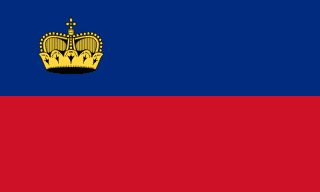
Overview
The Principality of Liechtenstein was established within the Holy Roman Empire in 1719. Occupied by both French and Russian troops during the Napoleonic Wars, it became a sovereign state in 1806 and joined the German Confederation in 1815. Liechtenstein became fully independent in 1866 when the Confederation dissolved. Until the end of World War I, it was closely tied to Austria, but the economic devastation caused by that conflict forced Liechtenstein to enter into a customs and monetary union with Switzerland. Since World War II (in which Liechtenstein remained neutral), the country's low taxes have spurred outstanding economic growth. In 2000, shortcomings in banking regulatory oversight resulted in concerns about the use of financial institutions for money laundering. However, Liechtenstein implemented anti-money laundering legislation and a Mutual Legal Assistance Treaty with the US that went into effect in 2003.
Geography
- Location
- Central Europe, between Austria and Switzerland
- Total Area
- 160 sq km
- Climate
- continental; cold, cloudy winters with frequent snow or rain; cool to moderately warm, cloudy, humid summers
- Terrain
- mostly mountainous (Alps) with Rhine Valley in western third
- Natural Resources
- hydroelectric potential, arable land
- Coastline
- 0 km (doubly landlocked)
- Land Borders
- 75 km
People & Society
- Population
- 40,547 (2025 est.)
- Religions
- Roman Catholic (official) 73.4%, Protestant Reformed 6.3%, Muslim 5.9%, Christian Orthodox 1.3%, Lutheran 1.2%, other Protestant 0.7%, other Christian 0.3%, other 0.8%, none 7%, unspecified 3.3% (2015 est.)
- Ethnic Groups
- Liechtensteiner 65.6%, Swiss 9.6%, Austrian 5.8%, German 4.5%, Italian 3.1%, other 11.4% (2021 est.)
- Life Expectancy
- 83 years (2024 est.)
- Urbanization
- 14.6% of total population (2023)
Government
- Government Type
- constitutional monarchy
- Capital
- Vaduz
- Independence
- 23 January 1719 (Principality of Liechtenstein established); 12 July 1806 (independence from the Holy Roman Empire); 24 August 1866 (independence from the German Confederation)
- Constitution
- previous 1862; latest adopted 5 October 1921
- Legal System
- civil law system influenced by Swiss, Austrian, and German law
- Executive Branch
- Prince HANS-ADAM II (since 13 November 1989, assumed executive powers on 26 August 1984)
Economy
- Economic Overview
- high-income European economy; Schengen Area participant; key European financial leader; integrated with Swiss economy and franc currency user; one of the highest GDP per capita countries; relies on US and Eurozone markets for exports
- GDP (Official Rate)
- $8.395 billion (2024 est.)
- Major Industries
- electronics, metal manufacturing, dental products, ceramics, pharmaceuticals, food products, precision instruments, tourism, optical instruments
Infrastructure & Communications
- Railways
- 9 km (2018)