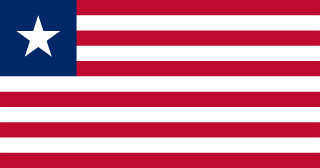
Overview
With 28 ethnic groups and languages, Liberia is one of the most ethnically diverse countries in the world. For hundreds of years, the Mali and Songhai Empires claimed most of Liberia. Beginning in the 15th century, European traders began establishing outposts along the Liberian coast. Unlike its neighbors, however, Liberia did not fall under European colonial rule. In the early 19th century, the US began sending freed enslaved people and other people of color to Liberia to establish settlements. In 1847, these settlers declared independence from the US, writing their own constitution and establishing Africa’s first republic. Early in Liberia’s history, tensions arose between the Americo-Liberian settlers and the indigenous population. In 1980, Samuel DOE, who was from the indigenous population, led a military coup and ushered in a decade of authoritarian rule. In 1989, Charles TAYLOR launched a rebellion that led to a prolonged civil war in which DOE was killed. A period of relative peace in 1997 permitted an election that brought TAYLOR to power. In 2000, fighting resumed. A 2003 peace agreement ended the war and prompted TAYLOR’s resignation. He was later convicted by the UN-backed Special Court for Sierra Leone in The Hague for his involvement in Sierra Leone's civil war. In 2005, Ellen JOHNSON SIRLEAF became president after two years of transitional governments; she was the first female head of state in Africa. In 2011, JOHNSON SIRLEAF won reelection but struggled to rebuild Liberia's economy -- particularly after the 2014-15 Ebola epidemic -- and to reconcile a nation still recovering from 14 years of fighting. In 2017, former soccer star George WEAH won the presidential runoff election, marking the first successful transfer of power from one democratically elected government to another since the end of Liberia’s civil wars. Like his predecessor, WEAH struggled to improve the country’s economy. In 2023, former Vice President Joseph BOAKAI was elected president, edging out WEAH by a thin margin, the first time since 1927 that an incumbent was not re-elected after one term.
Geography
- Location
- Western Africa, bordering the North Atlantic Ocean, between Cote d'Ivoire and Sierra Leone
- Total Area
- 111,369 sq km
- Climate
- tropical; hot, humid; dry winters with hot days and cool to cold nights; wet, cloudy summers with frequent heavy showers
- Terrain
- mostly flat to rolling coastal plains rising to rolling plateau and low mountains in northeast
- Natural Resources
- iron ore, timber, diamonds, gold, hydropower
- Coastline
- 579 km
- Land Borders
- 1,667 km
People & Society
- Population
- 5,563,541 (2025 est.)
- Languages
- English 20% (official) and 27 indigenous languages, including Liberian English variants
- Religions
- Christian 84.9%, Muslim 12%, Traditional 0.5%, other 0.1%, none 2.6% (2022 est.)
- Ethnic Groups
- Kpelle 20.2%, Bassa 13.6%, Grebo 9.9%, Gio 7.9%, Mano 7.2%, Kru 5.5%, Lorma 4.8%, Krahn 4.5%, Kissi, 4.3%, Mandingo 4.2%, Vai 3.8%, Gola 3.8%, Gbandi 2.9%, Mende 1.7%, Sapo 1%, Belle 0.7%, Dey 0.3%, other Liberian ethnic group 0.4%, other African 3%, non-African 0.2% (2022 est.)
- Life Expectancy
- 61.6 years (2024 est.)
- Urbanization
- 53.6% of total population (2023)
Government
- Government Type
- presidential republic
- Capital
- Monrovia
- Independence
- 26 July 1847
- Constitution
- previous 1847 (at independence); latest drafted 19 October 1983, revision adopted by referendum 3 July 1984, effective 6 January 1986
- Legal System
- mixed system of common law, based on Anglo-American law and customary law
- Executive Branch
- President Joseph BOAKAI (since 22 January 2024)
Economy
- Economic Overview
- low-income West African economy; food scarcity, especially in rural areas; high poverty and inflation; bad recession prior to COVID-19 due to Ebola crisis; growing government debt; longest continuously operated rubber plantation; large informal economy
- GDP (Official Rate)
- $4.75 billion (2024 est.)
- Major Industries
- mining (iron ore and gold), rubber processing, palm oil processing, diamonds
Infrastructure & Communications
- Railways
- 429 km (2008)