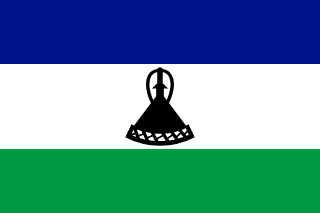
Overview
Paramount chief MOSHOESHOE I consolidated what would become Basutoland in the early 19th century and made himself king in 1822. Continuing encroachments by Dutch settlers from the neighboring Orange Free State caused the king to enter into an 1868 agreement with the UK that made Basutoland first a British protectorate and, after 1884, a crown colony. After gaining independence in 1966, the country was renamed the Kingdom of Lesotho. The Basotho National Party ruled the country during its first two decades. King MOSHOESHOE II was exiled in 1990, returned to Lesotho in 1992, was reinstated in 1995, and was then succeeded by his son, King LETSIE III, in 1996. Constitutional government was restored in 1993 after seven years of military rule. In 1998, violent protests and a military mutiny following a contentious election prompted a brief but bloody intervention by South African and Batswana military forces under the aegis of the Southern African Development Community (SADC). Subsequent constitutional reforms restored relative political stability. Peaceful parliamentary elections were held in 2002, but the National Assembly elections in 2007 were hotly contested, and aggrieved parties disputed how seats were awarded. In 2012, competitive elections saw Prime Minister Motsoahae Thomas THABANE form a coalition government -- the first in the country's history -- that ousted the 14-year incumbent, Pakalitha MOSISILI, who peacefully transferred power the following month. MOSISILI returned to power in snap elections in 2015 after the collapse of THABANE’s coalition government and an alleged attempted military coup. In 2017, THABANE returned to become prime minister but stepped down in 2020 after being implicated in his estranged wife’s murder. He was succeeded by Moseketsi MAJORO. In 2022, Ntsokoane Samuel MATEKANE was inaugurated as prime minister and head of a three-party coalition.
Geography
- Location
- Southern Africa, an enclave of South Africa
- Total Area
- 30,355 sq km
- Climate
- temperate; cool to cold, dry winters; hot, wet summers
- Terrain
- mostly highland with plateaus, hills, and mountains
- Natural Resources
- water, agricultural and grazing land, diamonds, sand, clay, building stone
- Coastline
- 0 km (landlocked)
- Land Borders
- 1,106 km
People & Society
- Population
- 2,222,962 (2025 est.)
- Languages
- Sesotho (official), English (official), Phuthi, Xhosa, Zulu
- Religions
- Protestant 47.8% (Pentecostal 23.1%, Lesotho Evangelical 17.3%, Anglican 7.4%), Roman Catholic 39.3%, other Christian 9.1%, non-Christian 1.4%, none 2.3% (2014 est.)
- Ethnic Groups
- Sotho 99.7%, other 0.3% (includes Kwena, Nguni (Hlubi and Phuthi), Zulu)
- Life Expectancy
- 60.2 years (2024 est.)
- Literacy Rate
- 90.4% (2024 est.)
- Urbanization
- 30.4% of total population (2023)
Government
- Government Type
- parliamentary constitutional monarchy
- Capital
- Maseru
- Independence
- 4 October 1966 (from the UK)
- Constitution
- previous 1959, 1967; latest adopted 2 April 1993 (effectively restoring the 1967 version)
- Legal System
- mixed system of English common law and Roman-Dutch law; High Court and Court of Appeal review legislative acts
- Executive Branch
- King LETSIE III (since 7 February 1996)
Economy
- Economic Overview
- lower middle-income economy surrounded by South Africa; environmentally fragile and politically unstable; key infrastructure and renewable energy investments; dire poverty; urban job and income losses due to COVID-19; systemic corruption
- GDP (Official Rate)
- $2.272 billion (2024 est.)
- Major Industries
- food, beverages, textiles, apparel assembly, handicrafts, construction, tourism