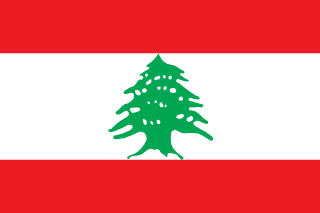
Overview
As a result of its location at the crossroads of three continents, the area that is modern-day Lebanon is rich in cultural and religious diversity. This region was subject to various foreign conquerors for much of its history, including the Romans, Arabs, and Ottomans. Following World War I, France acquired a mandate over the northern portion of the former Ottoman Empire province of Syria. From it the French demarcated the region of Lebanon in 1920, and it gained independence in 1943. Lebanon subsequently experienced periods of political turmoil interspersed with prosperity built on its position as a regional center for finance and trade.The country's 1975-90 civil war, which resulted in an estimated 120,000 fatalities, was followed by years of social and political instability, and sectarianism remains a key element of Lebanese political life. The Israeli defense forces, which occupied parts of Lebanon during the civil war, did not completely withdraw until 2000. Neighboring Syria influenced Lebanon's foreign and domestic policies while its military occupied Lebanon from 1976 until 2005, but its influence diminished significantly after 2005. Over 1.5 million Syrian refugees fled to Lebanon after the start of the Syrian conflict in 2011. Hizballah -- a major Lebanese political party, militia, and US-designated foreign terrorist organization -- and Israel continued attacks and counterattacks against each other after Syria's withdrawal and fought a brief war in 2006. After HAMAS attacked Israel on 7 October 2023, the intensity and frequency of these cross-border attacks increased substantially into a cycle of hostilities, mostly limited to the border areas as of January 2024. Lebanon's borders with Syria and Israel remain unresolved.Lebanon's prosperity has significantly diminished since the beginning of the country's economic crisis in 2019, which has crippled its economy, shut down its previously lucrative banking sector, reduced the value of its currency, and caused many Lebanese to emigrate in search of better prospects.
Geography
- Location
- Middle East, bordering the Mediterranean Sea, between Israel and Syria
- Total Area
- 10,400 sq km
- Climate
- Mediterranean; mild to cool, wet winters with hot, dry summers; the Lebanon Mountains experience heavy winter snows
- Terrain
- narrow coastal plain; El Beqaa (Bekaa Valley) separates Lebanon and Anti-Lebanon Mountains
- Natural Resources
- limestone, iron ore, salt, water-surplus state in a water-deficit region, arable land
- Coastline
- 225 km
- Land Borders
- 484 km
People & Society
- Population
- 5,364,482 (2024 est.)
- Religions
- Muslim 67.8% (31.9% Sunni, 31.2% Shia, smaller percentages of Alawites and Ismailis), Christian 32.4% (Maronite Catholics are the largest Christian group), Druze 4.5%, very small numbers of Jews, Baha'is, Buddhists, and Hindus (2020 est.)
- Ethnic Groups
- Arab 95%, Armenian 4%, other 1%
- Life Expectancy
- 79.2 years (2024 est.)
- Literacy Rate
- 92% (2019 est.)
- Urbanization
- 89.4% of total population (2023)
Government
- Government Type
- parliamentary democratic republic
- Capital
- Beirut
- Independence
- 22 November 1943 (from League of Nations mandate under French administration)
- Constitution
- drafted 15 May 1926, adopted 23 May 1926
- Legal System
- mixed system of civil law based on the French civil code, Ottoman legal tradition, and religious laws covering personal status, marriage, divorce, and other family relations of the Jewish, Islamic, and Christian communities
- Executive Branch
- President Joseph AOUN (since 9 January 2025)
Economy
- Economic Overview
- lower middle-income Middle Eastern economy; hyperinflation and sharp poverty increases; banks have ceased lending; economic contraction, destroyed infrastructure, and reduced consumer demand resulting from Israel-Hezbollah conflict
- GDP (Official Rate)
- $20.079 billion (2023 est.)
- Major Industries
- banking, tourism, real estate and construction, food processing, wine, jewelry, cement, textiles, mineral and chemical products, wood and furniture products, oil refining, metal fabricating
Infrastructure & Communications
- Railways
- 401 km (2017)