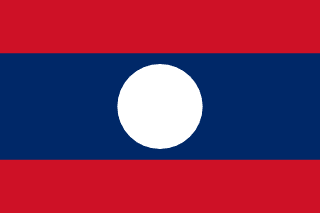
Overview
Modern-day Laos has its roots in the ancient Lao kingdom of Lan Xang, established in the 14th century under King FA NGUM. For 300 years, Lan Xang had influence reaching into present-day Cambodia and Thailand, as well as over all of what is now Laos. After centuries of gradual decline, Laos came under the domination of Siam (Thailand) from the late 18th century until the late 19th century, when it became part of French Indochina. The Franco-Siamese Treaty of 1907 defined the current Lao border with Thailand. Following more than 15 years of civil war, the communist Pathet Lao took control of the government in 1975, ending a six-century-old monarchy and instituting a one party--the Lao People's Revolutionary Party--communist state. A gradual, limited return to private enterprise and the liberalization of foreign investment laws began in the late 1980s. Laos became a member of ASEAN in 1997 and the WTO in 2013.In the 2010s, the country benefited from direct foreign investment, particularly in the natural resource and industry sectors. Construction of a number of large hydropower dams and expanding mining activities have also boosted the economy. Laos has retained its official commitment to communism and maintains close ties with its two communist neighbors, Vietnam and China, both of which continue to exert substantial political and economic influence on the country. China, for example, provided 70% of the funding for a $5.9 billion, 400-km railway line between the Chinese border and the capital Vientiane, which opened for operations in 2021. Laos financed the remaining 30% with loans from China. At the same time, Laos has expanded its economic reliance on the West and other Asian countries, such as Japan, Malaysia, Singapore, Taiwan, and Thailand. Nevertheless, despite steady economic growth for more than a decade, it remains one of Asia's poorest countries.
Geography
- Location
- Southeastern Asia, northeast of Thailand, west of Vietnam
- Total Area
- 236,800 sq km
- Climate
- tropical monsoon; rainy season (May to November); dry season (December to April)
- Terrain
- mostly rugged mountains; some plains and plateaus
- Natural Resources
- timber, hydropower, gypsum, tin, gold, gemstones
- Coastline
- 0 km (landlocked)
- Land Borders
- 5,274 km
People & Society
- Population
- 7,953,556 (2024 est.)
- Religions
- Buddhist 64.7%, Christian 1.7%, none 31.4%, other/not stated 2.1% (2015 est.)
- Ethnic Groups
- Lao 53.2%, Khmou 11%, Hmong 9.2%, Phouthay 3.4%, Tai 3.1%, Makong 2.5%, Katong 2.2%, Lue 2%, Akha 1.8%, other 11.6% (2015 est.)
- Life Expectancy
- 69 years (2024 est.)
- Literacy Rate
- 75.6% (2023 est.)
- Urbanization
- 38.2% of total population (2023)
Government
- Government Type
- communist party-led state
- Capital
- Vientiane (Viangchan)
- Independence
- 19 July 1949 (from France); 22 October 1953 (Franco-Lao Treaty recognizes full independence)
- Constitution
- previous 1947 (pre-independence); latest promulgated 13-15 August 1991
- Legal System
- civil law system similar in form to the French system
- Executive Branch
- President THONGLOUN Sisoulith (since 22 March 2021)
Economy
- Economic Overview
- lower middle-income, industrial Southeast Asian economy; high inflation due to 2022 currency depreciation brought on by persistently high debt; new Laos-China railway and dry port; rising inequities; ongoing labor shortages
- GDP (Official Rate)
- $16.503 billion (2024 est.)
- Major Industries
- mining (copper, tin, gold, gypsum); timber, electric power, agricultural processing, rubber, construction, garments, cement, tourism
Infrastructure & Communications
- Railways
- 422 km (2023)