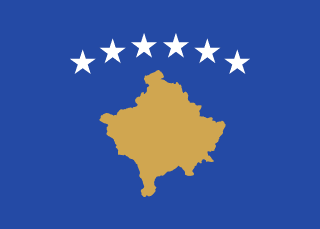
Overview
The Ottoman Empire took control of Kosovo in 1389 after defeating Serbian forces. Large numbers of Turks and Albanians moved to the region, and by the end of the 19th century, Albanians had replaced Serbs as the majority ethnic group in Kosovo. Serbia reacquired control of Kosovo during the First Balkan War of 1912, and after World War II, Kosovo became an autonomous province of Serbia in the Socialist Federal Republic of Yugoslavia (SFRY). Increasing Albanian nationalism in the 1980s led to riots and calls for Kosovo's independence, but in 1989, Belgrade -- which has in turn served as the capital of Serbia and Yugoslavia -- revoked Kosovo's autonomous status. When the SFRY broke up in 1991, Kosovo Albanian leaders organized an independence referendum, and Belgrade's repressive response led to an insurgency. Kosovo remained part of Serbia, which joined with Montenegro to declare a new Federal Republic of Yugoslavia (FRY) in 1992. In 1998, Belgrade launched a brutal counterinsurgency campaign, with some 800,000 ethnic Albanians expelled from their homes in Kosovo. After international mediation failed, a NATO military operation began in March 1999 and forced Belgrade to withdraw its forces from Kosovo. UN Security Council Resolution 1244 (1999) placed Kosovo under the temporary control of the UN Interim Administration Mission in Kosovo (UNMIK). Negotiations in 2006-07 ended without agreement between Serbia and Kosovo, though the UN issued a comprehensive report that endorsed independence. On 17 February 2008, the Kosovo Assembly declared Kosovo independent. Serbia continues to reject Kosovo's independence, but the two countries began EU-facilitated discussions in 2013 to normalize relations, which resulted in several agreements. Additional agreements were reached in 2015 and 2023, but implementation remains incomplete. In 2022, Kosovo formally applied for membership in the EU, which is contingent on fulfillment of accession criteria, and the Council of Europe. Kosovo is also seeking UN and NATO memberships.
Geography
- Location
- Southeastern Europe, between Serbia and Macedonia
- Total Area
- 10,887 sq km
- Climate
- influenced by continental air masses resulting in relatively cold winters with heavy snowfall and hot, dry summers and autumns; Mediterranean and alpine influences create regional variation; maximum rainfall between October and December
- Terrain
- flat fluvial basin at an elevation of 400-700 m above sea level surrounded by several high mountain ranges with elevations of 2,000 to 2,500 m
- Natural Resources
- nickel, lead, zinc, magnesium, lignite, kaolin, chrome, bauxite
- Coastline
- 0 km (landlocked)
- Land Borders
- 714 km
People & Society
- Population
- 1,977,093 (2024 est.)
- Religions
- Muslim 95.6%, Roman Catholic 2.2%, Orthodox 1.5%, other 0.1%, none 0.1%, unspecified 0.6% (2011 est.)
- Ethnic Groups
- Albanians 92.9%, Bosniaks 1.6%, Serbs 1.5%, Turk 1.1%, Ashkali 0.9%, Egyptian 0.7%, Gorani 0.6%, Romani 0.5%, other/unspecified 0.2% (2011 est.)
- Life Expectancy
- 73.1 years (2024 est.)
Government
- Government Type
- parliamentary republic
- Capital
- Pristina (Prishtine, Prishtina)
- Independence
- 17 February 2008 (from Serbia)
- Constitution
- previous 1974, 1990; latest (post-independence) draft finalized 2 April 2008, signed 7 April 2008, ratified 9 April 2008, entered into force 15 June 2008
- Legal System
- civil law system
- Executive Branch
- President Vjosa OSMANI-Sadriu (since 4 April 2021)
Economy
- Economic Overview
- small-but-growing European economy; non-EU member but unilateral euro user; very high unemployment, especially youth; vulnerable reliance on diaspora tourism services, curtailed by COVID-19 disruptions; unclear public loan portfolio health
- GDP (Official Rate)
- $11.149 billion (2024 est.)
- Major Industries
- mineral mining, construction materials, base metals, leather, machinery, appliances, foodstuffs and beverages, textiles
Infrastructure & Communications
- Railways
- 437 km (2020)