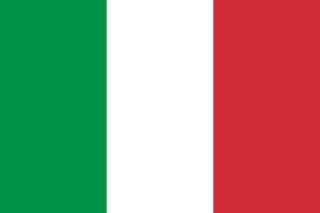
Overview
Italy became a nation-state in 1861 when the regional states of the peninsula, along with Sardinia and Sicily, were united under King Victor EMMANUEL II. An era of parliamentary government came to a close in the early 1920s when Benito MUSSOLINI established a Fascist dictatorship. His alliance with Nazi Germany led to Italy's defeat in World War II. A democratic republic replaced the monarchy in 1946, and economic revival followed. Italy is a charter member of NATO, as well as the European Economic Community (EEC) and its successors, the EC and the EU. It has been at the forefront of European economic and political unification, joining the Economic and Monetary Union in 1999. Persistent problems include sluggish economic growth, high youth and female unemployment, organized crime, corruption, and economic disparities between southern Italy and the more prosperous north.
Geography
- Location
- Southern Europe, a peninsula extending into the central Mediterranean Sea, northeast of Tunisia
- Total Area
- 301,340 sq km
- Climate
- predominantly Mediterranean; alpine in far north; hot, dry in south
- Terrain
- mostly rugged and mountainous; some plains, coastal lowlands
- Natural Resources
- coal, antimony, mercury, zinc, potash, marble, barite, asbestos, pumice, fluorspar, feldspar, pyrite (sulfur), natural gas and crude oil reserves, fish, arable land
- Coastline
- 7,600 km
- Land Borders
- 1,836.4 km
People & Society
- Population
- 60,924,851 (2025 est.)
- Religions
- Christian 80.8% (overwhelmingly Roman Catholic with very small groups of Jehovah's Witnesses and Protestants), Muslim 4.9%, unaffiliated 13.4%, other 0.9% (2020 est.)
- Ethnic Groups
- Italian (includes small clusters of German-, French-, and Slovene-Italians in the north, Albanian-Italians, Croat-Italians, and Greek-Italians in the south)
- Life Expectancy
- 83 years (2024 est.)
- Literacy Rate
- 99.3% (2019 est.)
- Urbanization
- 72% of total population (2023)
Government
- Government Type
- parliamentary republic
- Capital
- Rome
- Independence
- 17 March 1861
- Constitution
- previous 1848 (originally for the Kingdom of Sardinia and adopted by the Kingdom of Italy in 1861); latest enacted 22 December 1947, adopted 27 December 1947, entered into force 1 January 1948
- Legal System
- civil law system; Constitutional Court reviews legislation under certain conditions
- Executive Branch
- President Sergio MATTARELLA (since 3 February 2015)
Economy
- Economic Overview
- high-income, core EU economy; strong services, manufacturing, and tourism sectors; modest growth supported by net exports, low inflation, and public investments via EU funds; tight labor market with aging workforce and shortages in specialized skills; high public debt levels
- GDP (Official Rate)
- $2.373 trillion (2024 est.)
- Major Industries
- tourism, machinery, iron and steel, chemicals, food processing, textiles, motor vehicles, clothing, footwear, ceramics
Infrastructure & Communications
- Railways
- 18,475 km (2020) 12,936 km electrified