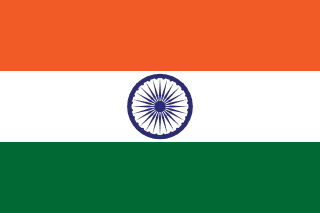
Overview
The Indus Valley civilization, one of the world's oldest, flourished during the 3rd and 2nd millennia B.C. and extended into northwestern India. Aryan tribes from the northwest infiltrated the Indian subcontinent about 1500 B.C.; their merger with the earlier Dravidian inhabitants created the classical Indian culture. The Maurya Empire of the 4th and 3rd centuries B.C. -- which reached its zenith under ASHOKA -- united much of South Asia. The Gupta dynasty (4th to 6th centuries A.D.) ushered in The Golden Age, which saw a flowering of Indian science, art, and culture. Islam spread across the subcontinent over a period of 700 years. In the 10th and 11th centuries, Turks and Afghans invaded India and established the Delhi Sultanate. In the early 16th century, the Emperor BABUR established the Mughal Dynasty, which ruled large sections of India for more than three centuries. European explorers began establishing footholds in India during the 16th century. By the 19th century, Great Britain had become the dominant political power on the subcontinent, and India was seen as the "Jewel in the Crown" of the British Empire. The British Indian Army played a vital role in both World Wars. Years of nonviolent resistance to British rule, led by Mohandas GANDHI and Jawaharlal NEHRU, eventually resulted in Indian independence in 1947. Large-scale communal violence took place before and after the subcontinent partition into two separate states -- India and Pakistan. The neighboring countries have fought three wars since independence, the last of which was in 1971 and resulted in East Pakistan becoming the separate nation of Bangladesh. India's nuclear weapons tests in 1998 emboldened Pakistan to conduct its own tests that same year. In 2008, terrorists originating from Pakistan conducted a series of coordinated attacks in Mumbai, India's financial capital. India's economic growth after economic reforms in 1991, a massive youth population, and a strategic geographic location have contributed to the country's emergence as a regional and global power. However, India still faces pressing problems such as extensive poverty, widespread corruption, and environmental degradation, and its restrictive business climate challenges economic growth expectations.
Geography
- Location
- Southern Asia, bordering the Arabian Sea and the Bay of Bengal, between Burma and Pakistan
- Total Area
- 3,287,263 sq km
- Climate
- varies from tropical monsoon in south to temperate in north
- Terrain
- upland plain (Deccan Plateau) in south, flat to rolling plain along the Ganges, deserts in west, Himalayas in north
- Natural Resources
- coal (fourth-largest reserves in the world), antimony, iron ore, lead, manganese, mica, bauxite, rare earth elements, titanium ore, chromite, natural gas, diamonds, petroleum, limestone, arable land
- Coastline
- 7,000 km
- Land Borders
- 13,888 km
People & Society
- Population
- 1,419,316,933 (2025 est.)
- Religions
- Hindu 79.8%, Muslim 14.2%, Christian 2.3%, Sikh 1.7%, other and unspecified 2% (2011 est.)
- Ethnic Groups
- Indo-Aryan 72%, Dravidian 25%, and other 3% (2000)
- Life Expectancy
- 68.2 years (2024 est.)
- Literacy Rate
- 81.7% (2023 est.)
- Urbanization
- 36.4% of total population (2023)
Government
- Government Type
- federal parliamentary republic
- Capital
- New Delhi
- Independence
- 15 August 1947 (from the UK)
- Constitution
- previous 1935 (pre-independence); latest draft completed 4 November 1949, adopted 26 November 1949, effective 26 January 1950
- Legal System
- common law system based on the English model; separate personal law codes apply to Muslims, Christians, and Hindus; judicial review of legislative acts
- Executive Branch
- President Droupadi MURMU (since 25 July 2022)
Economy
- Economic Overview
- largest South Asian economy; strong, sustained GDP growth led by technology and service sectors, foreign investment, and improved regulatory framework; high poverty rate and income inequality; initiatives on infrastructure development, digitization, manufacturing, and financial access
- GDP (Official Rate)
- $3.913 trillion (2024 est.)
- Major Industries
- textiles, chemicals, food processing, steel, transportation equipment, cement, mining, petroleum, machinery, software, pharmaceuticals
Infrastructure & Communications
- Railways
- 65,554 km (2014)