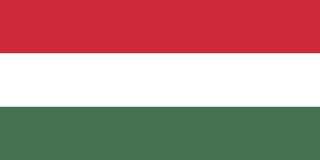
Overview
Hungary became a Christian kingdom in A.D. 1000 and for many centuries served as a bulwark against Ottoman Turkish expansion in Europe. The kingdom eventually became part of the Austro-Hungarian Empire, which collapsed during World War I. The country fell under communist rule after World War II. In 1956, Moscow responded to a Hungarian revolt and announcement of its withdrawal from the Warsaw Pact with a massive military intervention. Under the leadership of Janos KADAR in 1968, Hungary began liberalizing its economy, introducing so-called "Goulash Communism." Hungary held its first multiparty elections in 1990 and initiated a free market economy. It joined NATO in 1999 and the EU five years later.
Geography
- Location
- Central Europe, northwest of Romania
- Total Area
- 93,028 sq km
- Climate
- temperate; cold, cloudy, humid winters; warm summers
- Terrain
- mostly flat to rolling plains; hills and low mountains on the Slovakian border
- Natural Resources
- bauxite, coal, natural gas, fertile soils, arable land
- Coastline
- 0 km (landlocked)
- Land Borders
- 2,106 km
People & Society
- Population
- 9,855,745 (2024 est.)
- Religions
- Catholic 30.1% (Roman Catholic 27.5%, Greek Catholic 1.7%, other Catholic 0.9%), Calvinist 9.8%, Lutheran 1.8%, other Christian (includes Orthodox) 1.6%, other 0.4%, none 16.1%, no answer 40.1% (2022 est.)
- Ethnic Groups
- Hungarian 84.3%, Romani 2.1%, German 1%, other 1.2%, unspecified 13.7% (2022 est.)
- Life Expectancy
- 76 years (2024 est.)
- Urbanization
- 72.9% of total population (2023)
Government
- Government Type
- parliamentary republic
- Capital
- Budapest
- Independence
- 16 November 1918 (republic proclaimed); notable earlier dates: 25 December 1000 (crowning of King STEPHEN I, traditional founding date); 30 March 1867 (Austro-Hungarian dual monarchy established)
- Constitution
- previous 1949 (heavily amended in 1989 following the collapse of communism); latest approved 18 April 2011, signed 25 April 2011, effective 1 January 2012
- Legal System
- civil system influenced by the German model
- Executive Branch
- President Tamas SULYOK (since 5 March 2024)
Economy
- Economic Overview
- high-income EU and OECD economy; modest recovery from 2024 recession driven by private consumption and moderated inflation; challenges include high fiscal deficits, frozen access to EU funds, and risks from export reliance; implementing tax exemptions, price controls, and mortgage interest caps ahead of 2026 elections
- GDP (Official Rate)
- $222.905 billion (2024 est.)
- Major Industries
- mining, metallurgy, construction materials, processed foods, textiles, chemicals (especially pharmaceuticals), motor vehicles
Infrastructure & Communications
- Railways
- 7,687 km (2020) 3,111 km electrified