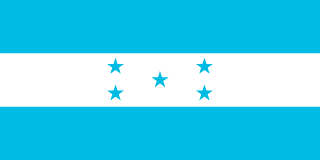
Overview
Once part of Spain's vast empire in the New World, Honduras became an independent nation in 1821. After two and a half decades of mostly military rule, a freely elected civilian government came to power in 1982. During the 1980s, Honduras proved a haven for anti-Sandinista contras fighting the Marxist Nicaraguan Government and an ally to Salvadoran Government forces fighting leftist guerrillas. Hurricane Mitch devastated the country in 1998, killing about 5,600 people and causing approximately $2 billion in damage. Since then, the economy has slowly rebounded, despite COVID-19 and severe storm-related setbacks in 2020 and 2021.
Geography
- Location
- Central America, bordering the Caribbean Sea, between Guatemala and Nicaragua and bordering the Gulf of Fonseca (North Pacific Ocean), between El Salvador and Nicaragua
- Total Area
- 112,090 sq km
- Climate
- subtropical in lowlands, temperate in mountains
- Terrain
- mostly mountains in interior, narrow coastal plains
- Natural Resources
- timber, gold, silver, copper, lead, zinc, iron ore, antimony, coal, fish, hydropower
- Coastline
- 823 km (Caribbean Sea 669 km; Gulf of Fonseca 163 km)
- Land Borders
- 1,575 km
People & Society
- Population
- 9,529,188 (2024 est.)
- Religions
- Evangelical 55%, Roman Catholic 33.4%, none 10.1%, unspecified 1.5% (2023 est.)
- Ethnic Groups
- Mestizo (mixed Indigenous and European) 90%, Indigenous 7%, African descent 2%, White 1%
- Life Expectancy
- 73.1 years (2024 est.)
- Literacy Rate
- 88.2% (2024 est.)
- Urbanization
- 60.2% of total population (2023)
Government
- Government Type
- presidential republic
- Capital
- Tegucigalpa
- Independence
- 15 September 1821 (from Spain)
- Constitution
- several previous; latest approved 11 January 1982, effective 20 January 1982
- Legal System
- civil law system
- Executive Branch
- President Iris Xiomara CASTRO de Zelaya (since 27 January 2022)
Economy
- Economic Overview
- second-fastest-growing Central American economy; COVID-19 and two hurricanes crippled activity; high poverty and inequality; declining-but-still-high violent crime disruption; systemic corruption; coffee and banana exporter; enormous remittances
- GDP (Official Rate)
- $37.094 billion (2024 est.)
- Major Industries
- sugar processing, coffee, woven and knit apparel, wood products, cigars
Infrastructure & Communications
- Railways
- 699 km (2014)