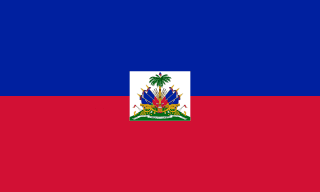
Overview
The native Taino -- who inhabited the island of Hispaniola when Christopher COLUMBUS first landed in 1492 -- were virtually wiped out by Spanish settlers within 25 years. In the early 17th century, the French established a presence on Hispaniola. In 1697, Spain ceded to the French the western third of the island, which later became Haiti. The French colony, based on forestry and sugar-related industries, became one of the wealthiest in the Caribbean but relied heavily on the forced labor of enslaved Africans and environmentally degrading practices. In the late 18th century, Toussaint L'OUVERTURE led a revolution of Haiti's nearly half a million slaves that ended France's rule on the island. After a prolonged struggle, and under the leadership of Jean-Jacques DESSALINES, Haiti became the first country in the world led by former slaves after declaring its independence in 1804, but it was forced to pay an indemnity of 100 million francs (equivalent to $22 billion USD in March 2023) to France for more than a century and was shunned by other countries for nearly 40 years. In 1862, the US officially recognized Haiti, but foreign economic influence and internal political instability induced the US to occupy Haiti from 1915 to 1934.Francois "Papa Doc" DUVALIER and then his son Jean-Claude "Baby Doc" DUVALIER led repressive and corrupt regimes that ruled Haiti in 1957-1971 and 1971-1986, respectively. Jean-Bertrand ARISTIDE was Haiti's first democratically elected president in 1991 and was elected a second time in 2000, but coups interrupted his first term after only a few months and ended his second term in 2004. President Jovenel MOÏSE was assassinated in 2021, leading the country further into an extra-constitutional governance structure and contributing to the country’s growing fragility. The Government of Haiti then installed Ariel HENRY -- whom President MOÏSE had nominated shortly before his death -- as prime minister. On 29 February 2024, a significant escalation of gang violence occurred on the 20th anniversary of ARISTIDE's second overthrow, after the announcement that HENRY would not hold elections until August 2025. HENRY’s return from an overseas trip was diverted to Puerto Rico when the airport closed due to gang violence. With control of much of the capital, Port-au-Prince, gang leaders called for the ouster of HENRY’S government. By mid-March, Haiti’s continued violence, HENRY’S inability to return to the country, and increasing pressure from the international community led HENRY to pledge to resign. On 25 April 2024, HENRY formally submitted his resignation as a nine-member Transitional Presidential Council assumed control, tasked with returning stability to the country and preparing elections. Since January 2023, Haiti has had no sitting elected officials.The country has long been plagued by natural disasters. In 2010, a major 7.0 magnitude earthquake struck Haiti with an epicenter about 25 km (15 mi) west of the capital, Port-au-Prince. An estimated 300,000 people were killed, and some 1.5 million left homeless. The earthquake was assessed as the worst in this region in 200 years. A 7.2 magnitude earthquake hit Haiti’s southern peninsula in 2021, causing well over 2,000 deaths; an estimated 500,000 required emergency humanitarian aid. Haiti is the poorest country in the Western Hemisphere, as well as one of the most unequal in wealth distribution.
Geography
- Location
- Caribbean, western one-third of the island of Hispaniola, between the Caribbean Sea and the North Atlantic Ocean, west of the Dominican Republic
- Total Area
- 27,750 sq km
- Climate
- tropical; semiarid where mountains in east cut off trade winds
- Terrain
- mostly rough and mountainous
- Natural Resources
- bauxite, copper, calcium carbonate, gold, marble, hydropower, arable land
- Coastline
- 1,771 km
- Land Borders
- 376 km
People & Society
- Population
- 11,898,812 (2025 est.)
- Religions
- Catholic 55%, Protestant 29%, Vodou 2.1%, other 4.6%, none 10% (2018 est.)
- Ethnic Groups
- Black 95%, mixed and White 5%
- Life Expectancy
- 65.6 years (2024 est.)
- Literacy Rate
- 68% (2017 est.)
- Urbanization
- 59.7% of total population (2023)
Government
- Government Type
- semi-presidential republic
- Capital
- Port-au-Prince
- Independence
- 1 January 1804 (from France)
- Constitution
- many previous; latest adopted 10 March 1987, with substantial revisions in June 2012
- Legal System
- civil law system strongly influenced by Napoleonic Code
- Executive Branch
- President (vacant)
Economy
- Economic Overview
- small Caribbean island economy and OECS-member state; extreme poverty and inflation; enormous income inequality; ongoing civil unrest due to recent presidential assassination; US preferential market access; very open to foreign direct investment
- GDP (Official Rate)
- $25.224 billion (2024 est.)
- Major Industries
- textiles, sugar refining, flour milling, cement, light assembly using imported parts