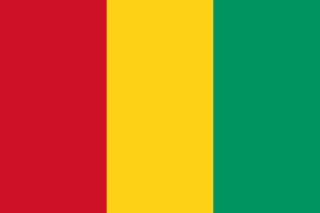
Overview
Guinea's deep Muslim heritage arrived via the neighboring Almoravid Empire in the 11th century. Following Almoravid decline, Guinea existed on the fringe of several African kingdoms, all competing for regional dominance. In the 13th century, the Mali Empire took control of Guinea and encouraged its already growing Muslim faith. After the fall of the West African empires, various smaller kingdoms controlled Guinea. In the 18th century, Fulani Muslims established an Islamic state in central Guinea that provided one of the earliest examples of a written constitution and alternating leadership. European traders first arrived in the 16th century, and the French secured colonial rule in the 19th century. In 1958, Guinea achieved independence from France. Sekou TOURE became Guinea’s first post-independence president; he established a dictatorial regime and ruled until his death in 1984, after which General Lansana CONTE staged a coup and seized the government. He too established an authoritarian regime and manipulated presidential elections until his death in 2008, when Captain Moussa Dadis CAMARA led a military coup, seized power, and suspended the constitution. In 2009, CAMARA was wounded in an assassination attempt and was exiled to Burkina Faso. In 2010 and 2013 respectively, the country held its first free and fair presidential and legislative elections. Alpha CONDE won the 2010 and 2015 presidential elections, and his first cabinet was the first all-civilian government in Guinean history. CONDE won a third term in 2020 after a constitutional change to term limits. In 2021, Col Mamady DOUMBOUYA led another successful military coup, establishing the National Committee for Reconciliation and Development (CNRD), suspending the constitution, and dissolving the government and the legislature. DOUMBOUYA was sworn in as transition president and appointed Mohamed BEAVOGUI as transition prime minister. The National Transition Council (CNT), which acts as the legislative body for the transition, was formed in 2022 and consists of appointed members representing a broad swath of Guinean society.
Geography
- Location
- Western Africa, bordering the North Atlantic Ocean, between Guinea-Bissau and Sierra Leone
- Total Area
- 245,857 sq km
- Climate
- generally hot and humid; monsoonal-type rainy season (June to November) with southwesterly winds; dry season (December to May) with northeasterly harmattan winds
- Terrain
- generally flat coastal plain, hilly to mountainous interior
- Natural Resources
- bauxite, iron ore, diamonds, gold, uranium, hydropower, fish, salt
- Coastline
- 320 km
- Land Borders
- 4,046 km
People & Society
- Population
- 14,374,590 (2025 est.)
- Languages
- French (official), Pular, Maninka, Susu, other native languages
- Religions
- Muslim 85.2%, Christian 13.4%, animist 0.2%, none 1.2% (2018 est.)
- Ethnic Groups
- Fulani (Peuhl) 33.4%, Malinke 29.4%, Susu 21.2%, Guerze 7.8%, Kissi 6.2%, Toma 1.6%, other/foreign 0.4% (2018 est.)
- Life Expectancy
- 64.6 years (2024 est.)
- Literacy Rate
- 39.6% (2018 est.)
- Urbanization
- 38.1% of total population (2023)
Government
- Government Type
- presidential republic
- Capital
- Conakry
- Independence
- 2 October 1958 (from France)
- Constitution
- previous 1958, 1990; 2010 and a referendum in 2020, which was suspended on 5 September 2021 via a coup d' tat; on 27 September, the Transitional Charter was released, which supersedes the constitution until a new constitution is promulgated
- Legal System
- civil law system based on the French model
- Executive Branch
- President Col. Mamady DOUMBOUYA (since 17 January 2026)
Economy
- Economic Overview
- growing but primarily agrarian West African economy; major mining sector; improving fiscal and debt balances prior to COVID-19; economy increasingly vulnerable to climate change; slow infrastructure improvements; gender wealth and human capital gaps
- GDP (Official Rate)
- $25.334 billion (2024 est.)
- Major Industries
- bauxite, gold, diamonds, iron ore; light manufacturing, agricultural processing
Infrastructure & Communications
- Railways
- 1,086 km (2017)