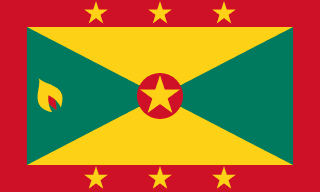
Overview
The indigenous Carib people inhabited Grenada when Christopher COLUMBUS landed on the island in 1498, but it remained uncolonized for more than a century. The French settled Grenada in the 17th century, established sugar estates, and imported large numbers of African slaves. Britain took the island in 1762 and vigorously expanded sugar production. In the 19th century, cacao eventually surpassed sugar as the main export crop; in the 20th century, nutmeg became the leading export. In 1967, Britain gave Grenada autonomy over its internal affairs. Full independence was attained in 1974, making Grenada one of the smallest independent countries in the Western Hemisphere. In 1979, a leftist New Jewel Movement seized power under Maurice BISHOP, ushering in the Grenada Revolution. On 19 October 1983, factions within the revolutionary government overthrew and killed BISHOP and members of his party. Six days later, US forces and those of six other Caribbean nations intervened, quickly capturing the ringleaders and their hundreds of Cuban advisers. Rule of law was restored, and democratic elections were reinstituted the following year and have continued since.
Geography
- Location
- Caribbean, island between the Caribbean Sea and Atlantic Ocean, north of Trinidad and Tobago
- Total Area
- 344 sq km
- Climate
- tropical; tempered by northeast trade winds
- Terrain
- volcanic in origin with central mountains
- Natural Resources
- timber, tropical fruit
- Coastline
- 121 km
- Land Borders
- 0 km
People & Society
- Population
- 114,621 (2024 est.)
- Languages
- English (official), French patois
- Religions
- Protestant 49.2% (includes Pentecostal 17.2%, Seventh Day Adventist 13.2%, Anglican 8.5%, Baptist 3.2%, Church of God 2.4%, Evangelical 1.9%, Methodist 1.6%, other 1.2%), Roman Catholic 36%, Jehovah's Witness 1.2%, Rastafarian 1.2%, other 5.5%, none 5.7%, unspecified 1.3% (2011 est.)
- Ethnic Groups
- African descent 82.4%, mixed 13.3%, East Indian 2.2%, other 1.3%, unspecified 0.9% (2011 est.)
- Life Expectancy
- 76.3 years (2024 est.)
- Urbanization
- 37.1% of total population (2023)
Government
- Government Type
- parliamentary democracy under a constitutional monarchy; a Commonwealth realm
- Capital
- Saint George's
- Independence
- 7 February 1974 (from the UK)
- Constitution
- previous 1967; latest presented 19 December 1973, effective 7 February 1974, suspended 1979 following a revolution but restored in 1983
- Legal System
- common law based on English model
- Executive Branch
- King CHARLES III (since 8 September 2022); represented by Governor General Cecile LA GRENADE (since 7 May 2013)
Economy
- Economic Overview
- small OECS service-based economy; large tourism, construction, transportation, and education sectors; major spice exporter; shrinking but still high public debt; vulnerable to hurricanes; emerging blue economy incentives
- GDP (Official Rate)
- $1.391 billion (2024 est.)
- Major Industries
- food and beverages, textiles, light assembly operations, tourism, construction, education, call-center operations